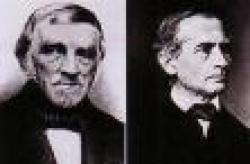
Harold Spencer Jones
 Great Britain
- Early Life and Education
- Career in Astronomy
- Director of Greenwich Observatory (1933-1955)
- Astronomical Contributions
- Lunar Research
- Solar System Studies
- Publications
- Honors and Awards
- International Astronomical Union
- Royal Medal
- Other Honors
- Legacy
Early Life and Education
Herbert Spencer Jones was born on September 29, 1870, in Kensington, London, England. He exhibited an early passion for astronomy, which led him to pursue a degree at the University of Cambridge.
Career in Astronomy
Greenwich Observatory and Cape of Good Hope (1913-1933)After graduating from Cambridge, Jones began his astronomical career at the Greenwich Observatory in 1913. In 1923, he became the director of the Royal Observatory at the Cape of Good Hope, South Africa.
Director of Greenwich Observatory (1933-1955)
In 1933, Jones returned to England and assumed the position of director of the Greenwich Observatory, where he served as the Royal Astronomer until 1955. During his tenure, he oversaw the relocation of the observatory to Herstmonceux in 1954.
Astronomical Contributions
Astrometry and Celestial MechanicsJones's primary research interests were in the fields of astrometry and celestial mechanics. At the Cape of Good Hope, he compiled the second and third Cape Catalogues, which contained positions and proper motions of tens of thousands of stars. He also analyzed long-term observations of lunar occultations to refine the elements of the Moon's orbit and the Earth's oblateness.
Lunar Research
In addition to his astrometric work, Jones conducted extensive studies of the Moon. He investigated the Moon's motion based on observations spanning centuries and determined precise values for the masses of the Moon and Venus.
Solar System Studies
Jones made significant contributions to the study of other celestial bodies in the Solar System. He observed Mars, investigated new stars, and conducted photometric and geomagnetic research.
Publications
Among his notable publications are "General Astronomy" and "Life on Other Worlds."
Honors and Awards
Royal Astronomical SocietyJones was a highly esteemed member of the scientific community, serving as President of the Royal Astronomical Society (1937-1939).
International Astronomical Union
He also held the role of President of the International Astronomical Union (1944-1948).
Royal Medal
In 1943, he was awarded the Royal Medal by the Royal Society of London for his exceptional contributions to astronomy.
Other Honors
Jones received numerous other honors, including the Gold Medal of the Royal Astronomical Society, the Catherine Bruce Medal, and memberships in various national science academies.
Legacy
Herbert Spencer Jones's legacy is etched in the annals of astronomy. His tireless work advanced our understanding of the Solar System, the stars, and the nature of the universe. In his honor, a crater on the Moon, a crater on Mars, and an asteroid have been named after him.