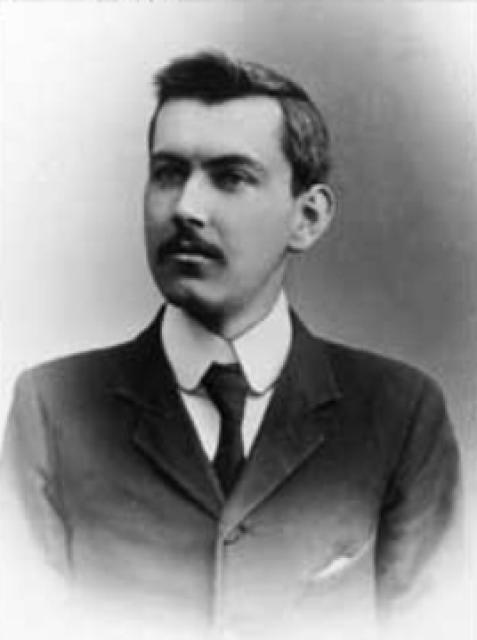
Harold Williams
 Great Britain
- Biography of Harold Williams
- Journey to Germany and Journalism Career
- World War I and Return to England
- Later Life and Death
Biography of Harold Williams
Childhood and EducationHarold Williams was a British linguist, journalist, spy, and renowned polyglot who had command over 58 languages. He was born into a family of the head of the Australian Methodist Church and the editor of the Methodist Times. Due to his father's work, the family frequently moved. Since childhood, Williams had an interest in various languages. Throughout his life, he mastered over fifty languages. In 1888, he enrolled in a school in Christchurch. In 1893, the family settled in Auckland. He attended the University of Auckland but failed his exams and left.
Journey to Germany and Journalism Career
In 1900, Williams traveled to Germany and studied at the universities of Berlin and Munich. In 1903, he was hired as a correspondent for The Times, covering Russia. The previous Times correspondent had been expelled from Russia after the publication of a fake telegram from Russian Minister of Interior Plehve regarding the Kishinev pogrom. As a result, The Times decided not to send its new "Russian correspondent" to Russia, and Williams reported on Russian events from Stuttgart. There, Williams became close with Russian politician Peter Struve and married Ariadna Tyrkova, who had fled Russia after being convicted for smuggling Struve's journal, "Osvobozhdenie." In 1905, after an amnesty was declared, Struve, Tyrkova, and Williams returned to Russia. Struve and Tyrkova participated in the formation of the Constitutional Democratic Party and joined its Central Committee. Williams lived in Russia for 14 years, working as a correspondent for The Times, Manchester Guardian, Morning Post, Daily Chronicle, and New York Times. At the same time, Williams maintained connections with the British Embassy in Russia and was close to the British Ambassador, Buchanan. In 1914, Williams published the book "Russia of the Russians," which was well-received both in Russia and abroad.
World War I and Return to England
During World War I, Williams, along with journalists Arthur Ransome and Hugh Walpole, was part of the semi-official Anglo-Russian Bureau, later transformed into the official British Propaganda Office, financed by British intelligence services. The organization aimed to spread British news in Russia, gather Russian news for the English press, and collect intelligence. In Nina Berberova's book, "The Iron Woman," English writers on secret service are described as follows:
In 1917, Williams sent daily reports on Russian news to the Daily Chronicle, describing the revolutionary events. This continued until March 18, 1918, when Williams left Russia with his wife. In 1918, they traveled to the southern region of Russia, reporting on the events of the civil war for The Times before returning to London.
Later Life and Death
In 1921, Williams became the editor of the Foreign Department at The Times. He passed away on November 18, 1928, following an unsuccessful surgery.


