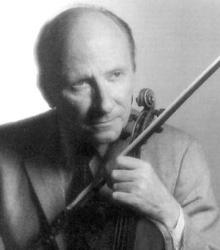
Harvey Cliburn
 USA
USABiography of Van Cliburn
Harvey Van Cliburn, the greatest pianist of modern times, was born in 1934 in the American city of Shreveport, Louisiana. From the age of three, Van Cliburn learned to play the piano from his mother, Rilda Cliburn, who studied with Arthur Friedheim, a pupil of Franz Liszt. His first public performance took place when he was four years old. At the age of 12, he made his debut with the Houston Symphony Orchestra as the winner of a national competition for young pianists in the USA.
In 1954, Van Cliburn graduated from the Juilliard School of Music in New York, where he studied under Rosina Lhévinne. He gained worldwide fame when he won the first prize at the First International Tchaikovsky Competition in 1958. Dmitri Shostakovich and Sviatoslav Richter called Van Cliburn a brilliantly talented pianist, while the patriarch of Moscow pianists, Alexander Borisovich Goldenweiser, exclaimed, "This is a young Rachmaninoff." He was welcomed as a national hero in his homeland, and May 20th was declared Music Day in the USA in honor of his victory in Moscow in 1958.
From 1960 to 1972, Cliburn toured the Soviet Union four times, performing in Moscow, Leningrad, Kiev, Minsk, Tbilisi, Sochi, and Novosibirsk. He made numerous unique recordings of piano concertos and solo performances. He performed for US presidents (starting with Harry Truman), members of European royal families, and heads of state in Europe, Asia, and South America. In 1962, Van Cliburn founded the International Tchaikovsky Piano Competition, which became one of the most prestigious in the world. He also established scholarship programs at universities in America, Budapest, Moscow, and Leningrad. Concert halls in various cities in the USA were named after him.
In the 1980s, the renowned pianist turned his focus to philanthropy and nearly ceased his concert activities. Van Cliburn's main interest was in teaching and developing the talents of young performers. He established scholarship programs at many music universities, including the Juilliard School, the Cincinnati Conservatory, the Christian Texas University, the University of Louisiana, the Liszt Academy in Budapest, and the Moscow and Leningrad Conservatories. He served on the Board of Trustees of the Interlochen and Michigan Academies of the Arts, where he created scholarship programs. He built the Van Cliburn Scholarship Lodge in Interlochen to raise additional funds.
Van Cliburn returned to the stage in 1987, and his comeback was once again connected to the Soviet Union. He performed at a state dinner in the White House in Washington, D.C., in honor of Mikhail Gorbachev. Two years later, 31 years after the memorable Tchaikovsky Competition, Cliburn returned to the USSR to perform at the Great Hall of the Moscow Conservatory and the Leningrad Philharmonic Hall. This reignited his love for performing, and in the 1990s, he actively toured and performed with various symphony orchestras in America.
In 1998, the Russian Academy of Sciences named one of the stars in the constellation Lyra after Van Cliburn to commemorate the 40th anniversary of the International Tchaikovsky Competition. In 2001, his name was immortalized in the American Classical Music Hall of Fame, and he received a Lifetime Achievement Award from the Texas Cultural Trust. His 1958 recording of Tchaikovsky's First Piano Concerto was included in the Hall of Fame of the National Academy of Recording Arts and Sciences.
In July 2003, President George W. Bush awarded Van Cliburn the Presidential Medal of Freedom, the highest civilian honor. In February 2004, the National Academy of Recording Arts and Sciences awarded him a Lifetime Achievement Award in the arts at the Grammy Awards ceremony. Remarkably, during the existence of the Soviet Union, Van Cliburn, a symbol of successful cultural collaboration between the USSR and the United States during the Cold War, did not receive a single medal.
In 2004, he performed a solo concert at the 50th anniversary of the Human Rights Society at the John F. Kennedy Center in Washington, D.C. In honor of his return to the stage, a collection of 8 CDs was released, featuring many of his classical concert performances, including Tchaikovsky's First Piano Concerto. The last time he visited Russia was in 1998. During his current visit, which will last until September 28th, the musician plans to spend his free time meeting with friends and enjoying Russia as a regular tourist.
Van Cliburn's love for Moscow began at a very young age when his parents gave him an illustrated "World History" book, where he found photographs of the Kremlin and St. Basil's Cathedral. When he traveled to Russia in 1958, he did not expect to advance past the first round of the competition but hoped to see these architectural wonders in person.
Van Cliburn carefully guards the secrets of his personal life. While he played "Moscow Nights" dreamily and attracted the admiration of his numerous Russian female fans, they were unaware of how indifferent this romantic artist was to female beauty. However, this tall man was not indifferent to good Russian vodka, especially when accompanied by blinis and red caviar. This was evident when he dined at the prestigious restaurant "Nostalgiya."
The program for his concert at the Moscow Conservatory's Great Hall, where tickets are selling quickly (prices range up to 5,000 rubles), includes Brahms' Capriccio in A minor and Intermezzo in E-flat minor, Chopin's Ballade in F minor and his Second Sonata (with the Funeral March), and, of course, Tchaikovsky's First Piano Concerto—the composition that launched Van Cliburn's fame in Russia. The pianist has lost count of how many times he has performed this concerto in his life.