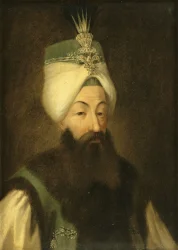
Hasan ibn Ali
- A grandson of the Prophet
- The agreement with Muawiya
- Imam, caliph, and peacemaker
- A legacy of restraint
Hasan ibn Ali occupied a unique place in early Islamic history: grandson of the Prophet Muhammad, briefly caliph after his father Ali’s assassination, and the second Imam in Twelver Shia Islam. In 661, facing a divided army and the advancing forces of Muawiya, he agreed to relinquish political rule rather than prolong a civil war. The decision helped end the First Fitna, but it did not settle the question of who had the right to lead the Muslim community. Sunni and Shia traditions remember Hasan with deep respect, while interpreting his authority in different ways.
A grandson of the Prophet
Hasan was born in Medina in 625, the elder son of Ali ibn Abi Talib and Fatima, Muhammad’s daughter. As one of the Prophet’s grandsons, he belonged to the Ahl al-Bayt, the family of Muhammad, and was raised within the earliest Muslim community. His younger brother Husayn would later become one of the most important figures in Shia Islam.
When Ali became caliph in 656, the community was already divided by the First Fitna, a civil war over leadership and justice following the murder of the third caliph, Uthman. Ali’s forces fought Muawiya, the governor of Syria, at the Battle of Siffin in 657. After Ali was assassinated in 661, supporters in Kufa recognized Hasan as caliph. Muawiya, who had a strong army and a firm base in Syria, moved to challenge him.
The agreement with Muawiya
Hasan’s position was weakened by divisions within his own forces and by desertions among commanders. The accounts differ in their details, but he ultimately negotiated an agreement with Muawiya and relinquished the caliphate. The transfer took place in 661, after a reign usually described as lasting about seven months. The year became known in Islamic tradition as the “Year of Unity,” because open warfare between the two sides ended and Muawiya became the sole caliph.
The agreement’s terms are reported differently by later sources. They commonly include guarantees of safety for Hasan and his supporters, and some versions say Muawiya would not name a successor, leaving the community to choose its next leader. Whether every reported term was agreed or later shaped by partisan accounts remains debated. Hasan returned to Medina and lived there under Umayyad rule.
Imam, caliph, and peacemaker
For Sunnis, Hasan is honored as a member of the Prophet’s family and as a rightly guided caliph whose decision prevented further Muslim bloodshed. Twelver Shia Muslims revere him as the second Imam, chosen by Ali and vested with religious authority, even though he surrendered political power. The two traditions thus interpret the agreement through different understandings of leadership, but both preserve Hasan’s status as a figure of piety and dignity.
Hasan died in Medina in 670. Early historical sources are nearly unanimous that he was poisoned, though they differ on who was responsible. Some accounts accuse his wife Ja‘da and allege that Muawiya had arranged the poisoning; that accusation is not independently established. Hasan was buried in the cemetery of al-Baqi after a dispute over whether he should be laid to rest near Muhammad. His tomb later became an important site of devotion, though it was destroyed in the twentieth century.
A legacy of restraint
Hasan’s political rule was brief, but his choice shaped the early caliphate. Rather than continue a conflict that threatened to fracture the Muslim community further, he accepted a settlement with a rival who held greater military power. Later Muslims have remembered this as an act of restraint, sacrifice, or strategic necessity. His legacy joins the history of the first civil war with the lasting religious significance of the Prophet’s family, making him a central figure in both Sunni and Shia memory.