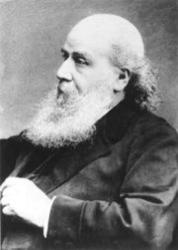
Haskell Brooks Curry
 USA
USA- Alonzo Church
- Career and Contributions
- Structuralism and Formalism
- Lambda Calculus and Curry's Theorem
- Legacy
Alonzo Church
Early Life and EducationAlonzo Church was an American mathematician and logician born on June 14, 1903, in Washington, D.C. He received his bachelor's degree from Princeton University in 1924 and his Ph.D. degree from the University of Chicago in 1927, under the supervision of Oswald Veblen.
Career and Contributions
Church's research program significantly advanced the foundational principles of mathematics. He made substantial contributions to the development of logic, establishing the foundations of what would become known as Church-Curry logic.
Structuralism and Formalism
Church played a pivotal role in shaping the metamathematical disciplines of structuralism and formalism. He developed the foundations of combinatory logic, which ultimately inspired the development of programming paradigms such as applicative and functional programming.
Lambda Calculus and Curry's Theorem
In his seminal 1932 paper, "A Set of Postulates for the Foundation of Logic," Church introduced lambda calculus, a formal system that laid the groundwork for lambda abstraction, a fundamental concept in computer science. In 1934, Haskell Curry proved a landmark theorem, known as Curry's theorem, which demonstrated the equivalence of lambda calculus and Church's combinatory logic.
Legacy
Church's profound influence on mathematics and computer science is evident in the eponymous functional operation "currying" and the programming languages Haskell and Curry. His work continues to inspire and shape contemporary research in these fields.
Church passed away on August 11, 1995, leaving behind an enduring legacy of mathematical innovation. His contributions have transformed our understanding of computation and laid the foundation for modern computer programming.