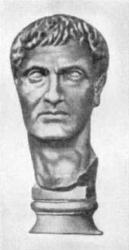
Heinrich Bellgard
 Austria
- Biography of Heinrich Bellegarde
- Early Career
- Leadership in the Austrian Army
- Command in Italy
- Military Campaigns
- Later Career and Achievements
- Final Years
Biography of Heinrich Bellegarde
Heinrich Joseph Johann von Bellegarde was an Austrian field marshal and statesman. He was born into an ancient Saxon noble family as the son of the Saxon Minister of War. Bellegarde began his military career in the Saxon army and later joined the Austrian service in 1771.
Early Career
Bellegarde started as a colonel and distinguished himself as the commander of a dragoon regiment during the war against the Ottoman Empire in 1788-1789. In 1792, he was promoted to major general and fought in the Netherlands, where he earned a reputation as a brave and talented commander.
Leadership in the Austrian Army
In 1794, Bellegarde became the chief of staff of General Count Dagobert von Wurmser's army on the Upper Rhine. When Archduke Charles took command of the Austrian army, Bellegarde was promoted to the rank of Feldmarschall-Leutnant (Lieutenant Field Marshal) and appointed as a member of his Military Council. In 1797, he was responsible for negotiating the Leoben Armistice.
Command in Italy
In 1799, Bellegarde was placed in command of a corps in Tyrol, tasked with guarding the communications between the armies of General Alexander Suvorov and Archduke Charles. He participated in the siege of Alexandria and, after the defeat at Marengo, replaced General Michael von Melas as the commander of the Austrian army in Italy.
Military Campaigns
Bellegarde achieved a victory over General Claude Lecourbe's forces on May 20th, 1800, but was defeated by General Jean Moreau's troops at Giuliano on June 20th. As a result of successful actions by General Guillaume Brune, Bellegarde was further defeated at Valleggio and forced to sign an armistice in Treviso on January 16th, 1801. According to the terms of the agreement, he had to surrender important fortresses, including Mantua, Peschiera, and Legnago, to the French.
Later Career and Achievements
After the signing of the Treaty of Lunéville on February 9th, 1801, Bellegarde was appointed to command Austrian forces in Venice. In 1801, he was promoted to general of cavalry and became the commander of troops in the internal regions of Austria. He also served as a member of the Hofkriegsrat, the Imperial Military Council. During the 1805 campaign, Bellegarde commanded a corps as part of Archduke Charles' army in Italy. He played a significant role in the Battle of Caldiero.
Final Years
After the peace treaty, Bellegarde held the position of Commander-in-Chief in Graz and later in Galicia. In the 1809 campaign, he led the 1st Army Corps and the army in Upper Palatinate. He participated in major military actions against the French army and achieved a victory over Marshal Louis-Nicolas Davout's corps. He then joined forces with Archduke Charles, and on May 21st, 1809, Austrian troops repelled Napoleon's 5 corps from Aspern to the Danube.
Bellegarde continued to serve in various high-ranking positions, including as the President of the Hofkriegsrat and the Conference Minister. He participated in the reorganization of the Austrian army and, in 1813, was appointed as the Commander-in-Chief of Austrian forces in Italy and Illyria. After Napoleon's abdication, he negotiated a ceasefire with Vice-King of Italy Eugène de Beauharnais. Following the signing of the Treaty of Paris, Bellegarde became the General-Governor of the returned Italian provinces.
In the 1815 campaign, Bellegarde led the Austrian forces in Italy against Joachim Murat and achieved several victories, including at Ferrara, Occhio, and Tolentino. After the campaign, he became the Governor-General of Venice. Bellegarde held various positions in the Austrian government until his retirement in 1825, although he remained Oberhofmeister (Grand Master of the Court) to Crown Prince Ferdinand until 1832.