Heinrich Wild
 Switzerland
- Early Life and Education
- Academic Career and Research
- Director of the Main Physical Observatory
- International Collaborations and Honors
- Later Career and Legacy
Early Life and Education
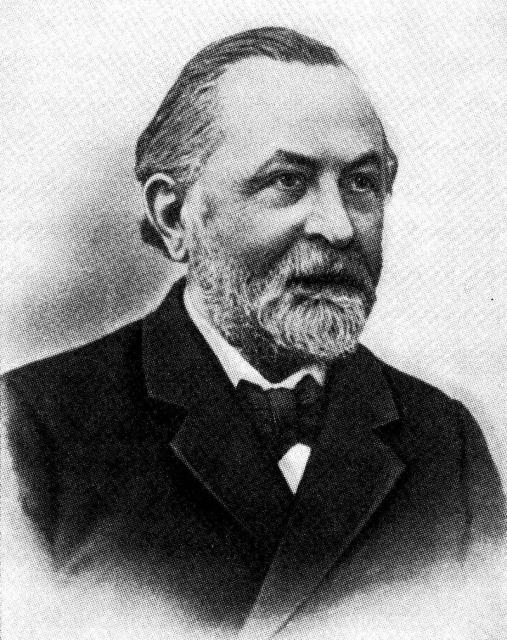
Heinrich Wild was born on December 17, 1833, in Uster, Switzerland. He pursued his education at the University of Zurich, where he earned a doctorate in philosophy in 1854.
Academic Career and Research
Upon graduating, Wild studied physics under Professor F. Neumann in Königsberg. In 1857, he received his doctorate and worked in Heidelberg with Kirchhoff and Bunsen. He returned to Zurich as a lecturer at the university and technical school.
In 1858, Wild was appointed Professor of Physics and Director of the Astronomical Observatory in Bern. He transformed the observatory into a meteorological one with advanced instruments. He established a network of meteorological stations in Switzerland and developed numerous physical and meteorological devices.
Director of the Main Physical Observatory
In 1868, Wild was invited to Saint Petersburg to head the Main Physical Observatory. As an Extraordinary Academician of Physics and Meteorology, he expanded the Russian meteorological network, establishing over a thousand stations by 1895. He played a crucial role in founding the weather bureau in St. Petersburg in 1872.
International Collaborations and Honors
Wild's research extended beyond Russia. He served as a member of the International Committee for Weights and Measures, helping to define the unit of resistance (ohm). In 1879, he was elected President of the International Meteorological Committee.
In 1880, Wild became Chairman of the International Polar Commission, initiating the First International Polar Year in 1882. He designed the expedition programs and led the analysis and publication of the data.
Later Career and Legacy
Wild retired from the Russian government in 1895 but remained an honorary member of the Imperial Saint Petersburg Academy of Sciences. He returned to Switzerland and was a member of several scientific societies.
Wild's legacy includes his contributions to meteorology, the advancement of measurement standards, and his role in international scientific collaborations. Despite criticisms by some colleagues, his tireless efforts and comprehensive data collection shaped the field of meteorology.