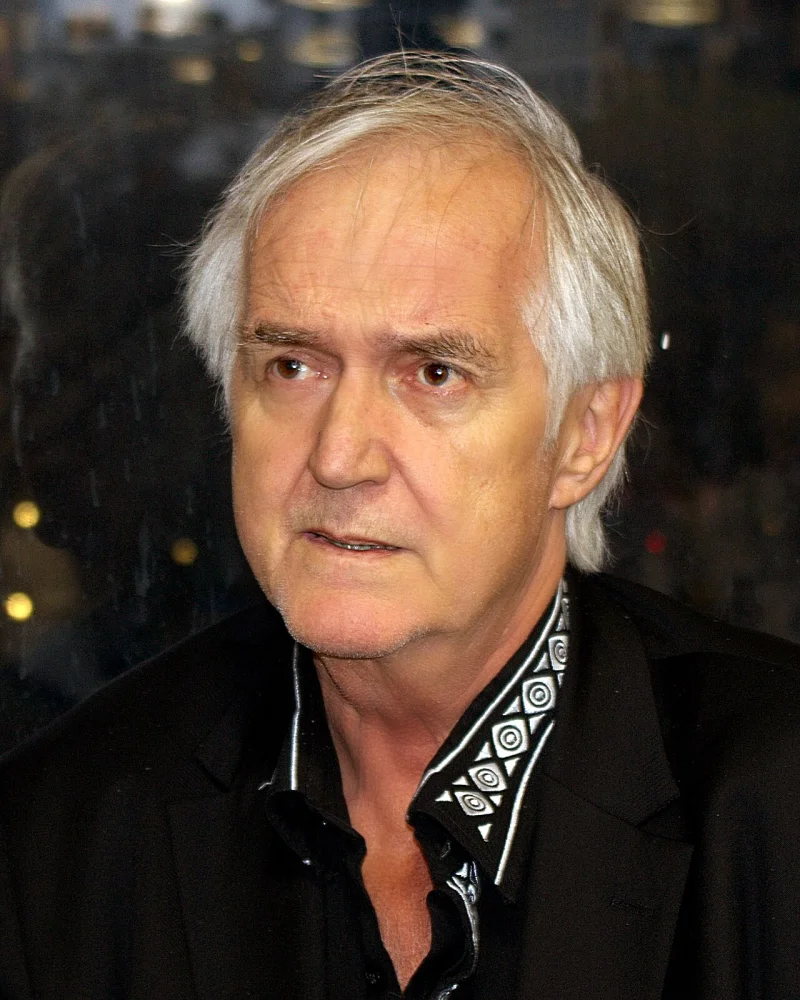
Henning Mankell
- Early Life and the Stage
- A Life Between Sweden and Mozambique
- The World of Kurt Wallander
- Personal Life and Final Years
Henning Mankell was a Swedish novelist, playwright, and theatre director whose work moved between the police station of Kurt Wallander and the social realities of southern Africa. The Wallander books made him an international name and helped bring Scandinavian crime fiction to a global audience. Yet Mankell also saw himself as a theatre-maker and political writer, dividing much of his life between Sweden and Mozambique.
Early Life and the Stage
Mankell was born in Stockholm on February 3, 1948. After his parents separated, he grew up mainly in the central Swedish town of Sveg, where his father worked as a judge. He left school as a teenager and travelled before returning to Sweden to work in theatre. By the time he was 20, he was writing plays and working as a stagehand and director.
His first novel, The Rock Blaster, appeared in 1973. The book followed a working-class man across decades of Swedish social change, a subject that reflected Mankell’s interest in how individual lives are shaped by economic and political forces. He continued to write for the stage throughout his career, eventually producing dozens of plays as well as novels, children’s books, and screenplays.
A Life Between Sweden and Mozambique
A journey to Guinea-Bissau in 1973 began a lifelong connection with Africa. Mankell spent time in Zambia and later made Mozambique a second home. In 1986 he was invited to lead Teatro Avenida in Maputo, where he worked with local performers and remained closely involved for decades. He divided his time between the Swedish coast and Mozambique, often writing in one place about the other.
Africa became a recurring setting in his fiction, including A Treacherous Paradise, Chronicler of the Winds, and Kennedy’s Brain. He also supported charitable work and refugee causes, and spoke out against racism and nationalism. In 2010, he joined an aid flotilla bound for Gaza; after Israeli forces boarded the ship, he was detained and deported to Sweden. The episode brought his activism into international headlines.
The World of Kurt Wallander
Mankell’s best-known creation was Kurt Wallander, a police inspector based in the southern Swedish town of Ystad. The series began with Faceless Killers in 1991. Wallander was a capable but troubled detective, wrestling with personal strain and a society changing around him. The novels used crime plots to examine immigration, political extremism, violence, and the fraying of Sweden’s social compact.
The books became bestsellers and were translated into more than forty languages. Wallander was adapted for Swedish television and for the BBC series starring Kenneth Branagh, introducing the character to new audiences. The series helped establish the international appeal of Nordic crime fiction, but it represented only one part of Mankell’s broad output. He also wrote historical and political novels, children’s stories, and works set in Africa.
Personal Life and Final Years
Mankell married theatre producer and director Eva Bergman, daughter of filmmaker Ingmar Bergman. He continued writing and directing into later life. In 2014, he publicly described his diagnosis of cancer and the treatment that followed, turning his experience of illness into candid reflections on mortality, fear, and the work of writing.
Henning Mankell died in Gothenburg on October 5, 2015, aged 67. He left behind a body of work that crossed languages and genres, along with a reputation shaped by both his fiction and his public convictions. For many readers, Wallander remains the doorway into his books; his theatre work, African settings, and activism reveal the wider concerns that animated them.