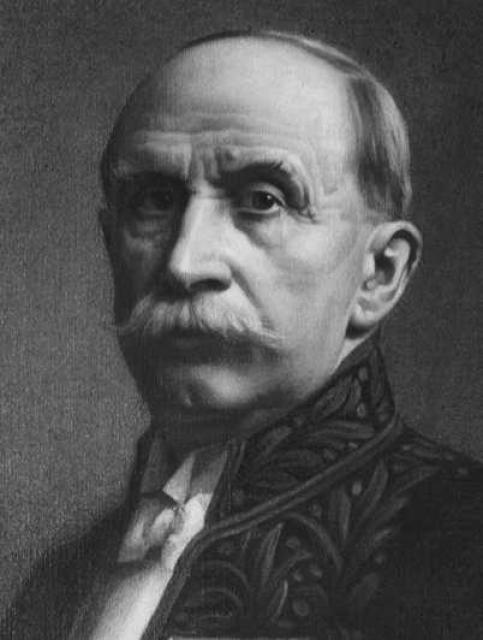
Henri Alexandre Deslandres
 France
- Henri-Alexandre Deslandres: Astronomer and Physicist
- Early Life and Education
- Career and Research
- Molecular Spectroscopy
- Solar Physics
- Honors and Recognition
Henri-Alexandre Deslandres: Astronomer and Physicist
Henri-Alexandre Deslandres, a prominent French astronomer and physicist, made significant contributions to the fields of solar physics and molecular spectroscopy.
Early Life and Education
Deslandres was born in Paris in 1874. He graduated from the prestigious École Polytechnique in Paris in 1874.
Career and Research
Following his graduation, Deslandres worked in physics laboratories at the École Polytechnique and the University of Paris. From 1889 to 1897, he studied at the Paris Observatory, and from 1897 to 1929, he held the position of Director at the Meudon Observatory.
Molecular Spectroscopy
Deslandres's research in molecular spectroscopy focused on the spectra of molecules such as nitrogen, water, and cyan. He identified harmonic vibrations in molecules and proposed two empirical laws describing the relationships between wave numbers within and between molecular spectral bands. These laws, known as the Deslandres Laws, were later interpreted within the framework of quantum mechanics.
Solar Physics
In the field of solar physics, Deslandres made important discoveries. Independently of George Ellery Hale, he invented the spectroheliograph in 1891, which allowed astronomers to obtain monochromatic images of the Sun. He also independently discovered the central reversals in the H and K lines of the calcium ion in the solar spectrum.
Deslandres held progressive views on solar activity, believing it to have an electromagnetic nature. He hypothesized the existence of solar radio emission, though it would not be observed until 1942.
Honors and Recognition
Deslandres's contributions were recognized with numerous honors and awards. He was elected to the French Academy of Sciences in 1902 and served as its President in 1920. He was also a foreign member of the Russian Academy of Sciences, the London Royal Society, and many other scientific societies.
Deslandres received the Gold Medal from the Royal Astronomical Society in 1913, the Henry Draper Medal from the National Academy of Sciences in 1913, and the Bruce Medal from the Pacific Astronomical Society in 1921. A lunar crater and the asteroid 11763 Deslandres are named after him.