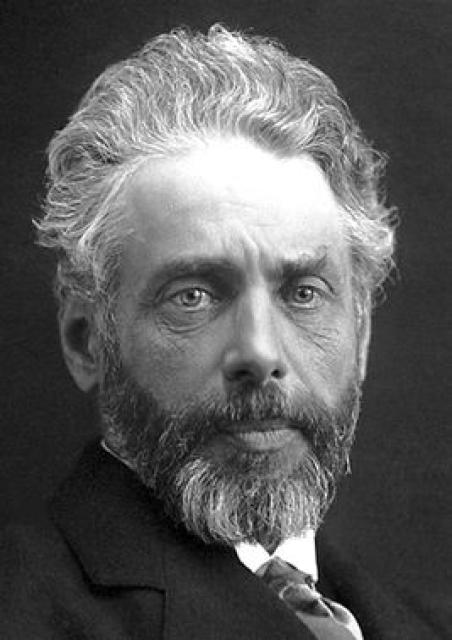
Henrik Pontoppidan
 Denmark
- From the vicarage to the writing desk
- Novels of a changing Denmark
- Nobel recognition and a long afterlife
Henrik Pontoppidan turned away from a conventional engineering career to become one of Denmark’s most incisive novelists. Across more than six decades, he used realism, irony and a sharp eye for self-deception to examine a country in motion. His achievement was recognized in 1917, when he shared the Nobel Prize in Literature with Karl Gjellerup.
From the vicarage to the writing desk
Pontoppidan was born in Fredericia on 24 July 1857, the son of a clergyman, and grew up in Randers after his family moved there. He left home for Copenhagen to study engineering at the Polytechnic Institute. The technical training would later feed into his fiction, but the profession did not hold him: after completing the first part of his studies, he withdrew in 1879 and began teaching at a folk high school run by his brother Morten.
He published his first book, the short story collection “Clipped Wings,” in 1881. Its attention to rural hardship and its criticism of social privilege and religious authority announced a writer unwilling to romanticize provincial life. Early stories and novels built a reputation for satire, while journalism helped support him as he developed a literary career.
Novels of a changing Denmark
Pontoppidan’s major novels track the collision between private ambition and public life. “The Promised Land,” published in parts from 1891 to 1895, follows a clergyman and uses his story to probe religious, political and cultural tensions in the countryside. “Lucky Per,” his sprawling 1898–1904 novel, follows a minister’s son who rejects his upbringing and dreams of becoming an engineer. The hero’s confidence and ambition gradually meet the limits of his own character and the society around him.
The novels are vivid portraits of Denmark at a time of social and political change, but their force comes from the people at their center. Pontoppidan was alert to ideals that curdle into vanity, reform that falls short, and the ways people deceive themselves as well as others. His later five-volume work “The Realm of the Dead,” published between 1912 and 1916, widened that lens to consider the country’s politics and moral climate.
Nobel recognition and a long afterlife
In 1917, Pontoppidan shared the Nobel Prize in Literature with fellow Danish author Karl Gjellerup. The Academy praised his substantial portrayals of contemporary Danish life. The honor recognized a body of work that was both deeply national in its detail and attentive to questions of ambition, faith, freedom and responsibility that travel well beyond Denmark.
Pontoppidan stopped publishing novels with “Man’s Heaven” in 1927, then turned increasingly to memoir. His autobiographical books revisited his youth, education and changing beliefs, subjects that had also shaped his fiction. He died in Charlottenlund, near Copenhagen, on 21 August 1943.
His best-known novels remain enduring guides to Denmark’s literary and social history. Yet Pontoppidan’s characters still feel immediate: they want to remake their lives, discover what they believe, and learn—often painfully—what their ideals can bear.


