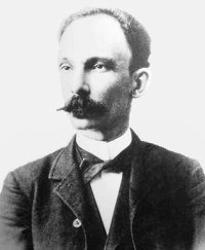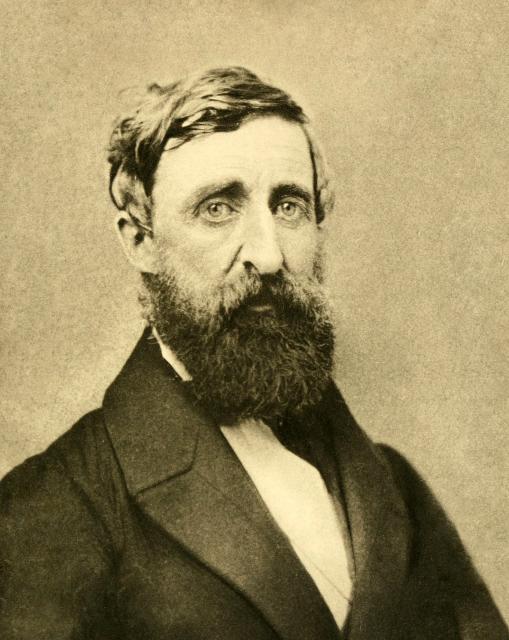
Henry David Thoreau
 USA
USABiography of Henry David Thoreau
Henry David Thoreau was an American writer and philosopher who spent his entire life in Concord, Massachusetts. He was born on July 12, 1817 in Concord. Thoreau attended Harvard University from 1833 to 1837, and after a brief period teaching in a school, he chose to pursue various temporary jobs instead of a stable career like his fellow graduates.
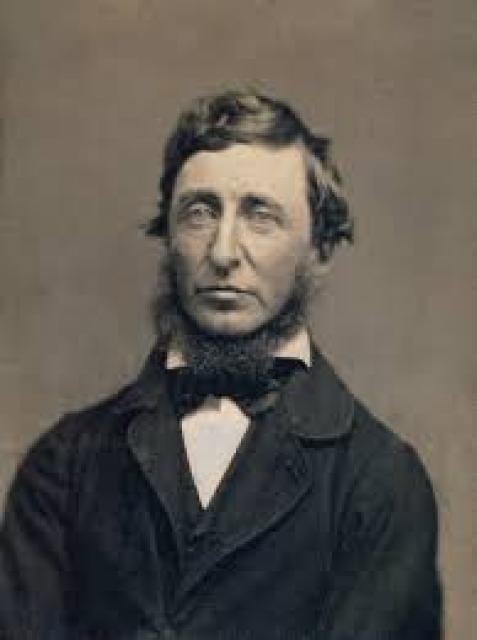
Thoreau became friends with Ralph Waldo Emerson, who supported his pursuits and spiritual aspirations. His first publication appeared in the transcendentalist journal "The Dial." At the age of 28, with no position or money, Thoreau embarked on his famous experiment. He lived in solitude for over two years, from July 4, 1845 to September 6, 1847, in a cabin he built with his own hands near Walden Pond, just outside Concord. This experience led to the creation of his great book, "Walden, or Life in the Woods," published in 1854.
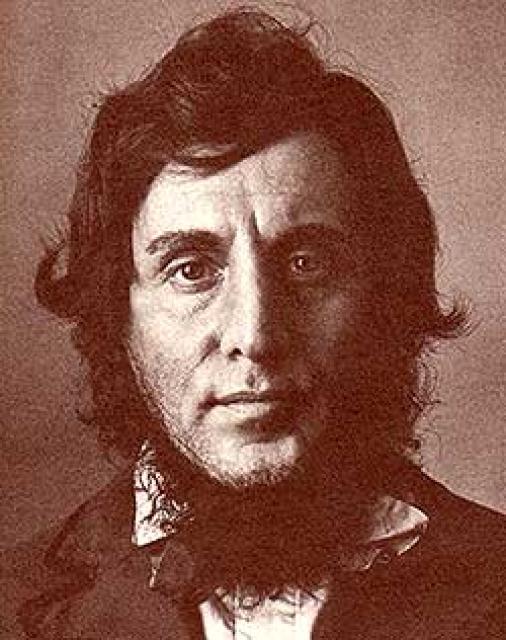
In "Walden," Thoreau rejected and mocked societal values, finding joy in simplicity and the meaningfulness of everyday seasonal work. The detailed account of building the cabin, tending to the fire, and sustaining himself with his own crops evokes comparisons to Robinson Crusoe. The book became one of the most read works of American literature and influenced diverse writers such as Leo Tolstoy, W.B. Yeats, and Ernest Hemingway.
After leaving Walden, Thoreau realized that he had the ability to live life on his own terms. He devoted just enough time to the family-owned store and his duties as a surveyor to support his parents and sister, as he never married. Thoreau minimized his materialistic expenditures and focused on his creative endeavors.
Thoreau's first published book was "A Week on the Concord and Merrimack Rivers" in 1849, which chronicled a two-week trip taken in 1839 with his brother John. It included essays, poems, and nearly 300 quotes from books he had read. His other books, "The Maine Woods" (1864) and "Cape Cod" (1865), were both published posthumously. "The Maine Woods" was based on his hiking and canoeing trips in the mountains, lakes, and rivers of Maine, while "Cape Cod" described his three walking excursions on the peninsula.
Thoreau's notable essays include "Civil Disobedience" (1849), which expressed his beliefs and led to his night in jail in July 1846 for refusing to pay taxes to a government he did not support. Many years later, this essay greatly influenced Gandhi in his resistance against British rule in India. Other essays such as "Slavery in Massachusetts" (1854), "A Plea for John Brown" (1860), and "Life Without Principle" (1863) also exemplified Thoreau's uncompromising stance and his rejection of government interference in people's lives.
Thoreau passed away in Concord on May 6, 1862, leaving behind a legacy of philosophical and literary works that continue to inspire readers to this day.