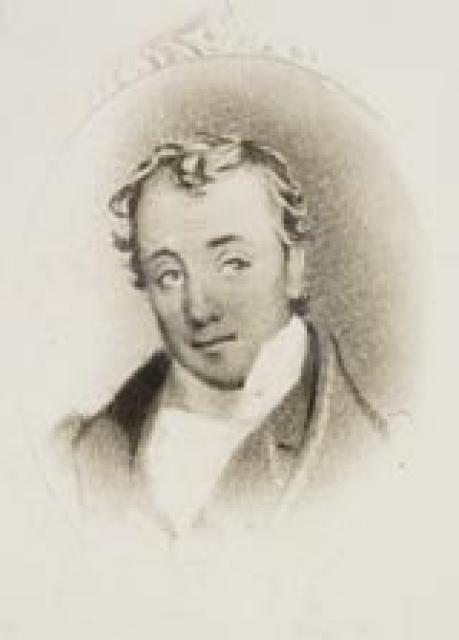
Henry Gellibrand
 Great Britain
Biography of Henry Gellibrand
Henry Gellibrand, the English mathematician known for his contributions to the study of the Earth's magnetic field, was born in Aldersgate, London. He received his education at Oxford University, where he specialized in mathematics. One of his teachers at Oxford was Henry Savile. In 1619, Gellibrand earned a Bachelor's degree, followed by a Master's degree in 1623. During his time at Oxford, he became acquainted with Henry Briggs.
After completing his studies, Gellibrand became a pastor in Chiddingstone, Kent. However, he is best known for his research on the Earth's magnetic field. Gellibrand discovered that the magnetic declination, the angle between the compass needle and true north, was not constant but changed over time. In 1635, he published his findings in an article titled "A discourse mathematical on the variation of the magnetical needle, together with its admirable diminution lately discovered."
Gellibrand's analysis, based on his own measurements as well as previous experiments conducted by William Borough in 1580 and Edmund Gunter in 1622, revealed that the magnetic inclination had significantly changed over several decades, contradicting the theories of William Gilbert. His discovery demonstrated that the Earth's magnetic field is not constant.
In addition to his work on the Earth's magnetic field, Gellibrand also developed a method for measuring longitude based on lunar eclipses. He used data from a lunar eclipse that occurred on October 29, 1631, observed in both London and Canada. By analyzing the time difference between the beginning of the eclipse in the two locations, Gellibrand accurately calculated the distance between them. Captain Thomas James, who was on an expedition in search of the Northwest Passage and happened to be on one of the Canadian islands during the eclipse, provided Gellibrand with the necessary data.
Gellibrand also edited and published Henry Briggs' mathematical tables in 1633, known as "Trigonometria Britannica." He held the position of Professor of Astronomy at Gresham College, succeeding Edmund Gunter. However, his appointment was not without controversy, as a religious scandal resulted in a legal dispute. Gellibrand's puritanical views and the publication of an almanac by William Beale, which portrayed Catholic saints as inferior, sparked the conflict.
Henry Gellibrand passed away in 1637 at the age of 39 due to a fever. He was buried at St Peter Le Poer cemetery. His works, including "Institution Trigonometrical" and the highly popular "Epitome of Navigation," were repeatedly reprinted after his death.