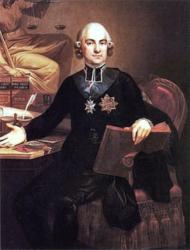
Henry Navigator
 Portugal
- Prince Henry the Navigator: A Pioneer of Exploration
- A Man of Multiple Interests
- The Sagres Observatory and Navigation School
- Southern Expeditions and the Search for a Sea Route
- Discoveries and Maritime Innovations
- Papal Sanction and Colonial Expansion
- Legacy and Impact
Prince Henry the Navigator: A Pioneer of Exploration
Henry the Navigator, also known as Infante Dom Henrique, was a Portuguese prince and the son of King John I. He played a pivotal role in organizing many Portuguese maritime expeditions along the western African coast, which laid the foundation for Portugal's future maritime and colonial dominance.
A Man of Multiple Interests
Henry's motivations were complex, intertwining the interests of a colonizer, an explorer, a missionary, and a crusader. As a colonizer, he sought to expand Portuguese territory and influence. As an explorer, he yearned to discover new lands and map the unknown. As a missionary, he aimed to spread Christianity among non-Christian populations. And as a crusader, he fought against Arab forces in North Africa.
The Sagres Observatory and Navigation School
In 1418, Henry established himself in the southern Portuguese town of Lagos and founded an observatory there. He also established a navigation school at Sagres, where leading mathematicians and cartographers taught and collaborated. This school became a hub for the development of maritime knowledge and technology.
Southern Expeditions and the Search for a Sea Route
Henry's primary focus was on expeditions to the south along the western coast of Africa. His goal was twofold: to find an eastern sea route to India around Africa and to combat the threat of Barbary pirates that plagued Portuguese shipping and coastal areas. The pursuit of a sea route to India was driven by Portugal's desire to participate in the lucrative spice trade, which was dominated by other nations due to its location outside the main trading routes.
Discoveries and Maritime Innovations
From 1419 until his death, Henry sponsored numerous expeditions that resulted in the discovery of several islands off the western coast of Africa, including Madeira, the Azores, and the Cape Verde Islands. These expeditions rounded Cape Bojador and Cape Blanco and explored the estuaries of the Senegal and Gambia rivers. They also brought back gold from the Guinean coast and established trading posts on the newly discovered lands. Henry also established a state monopoly on the slave trade after the initial introduction of African slaves.
Henry recognized the importance of maritime technology and кораблестроение. He invited skilled craftsmen from various countries to Portugal and encouraged the development of new ship designs. Under his patronage, the caravel, a type of ship with lateen sails, was developed. The caravel was faster and more maneuverable than Mediterranean ships, making it ideal for long ocean voyages and exploration.
Papal Sanction and Colonial Expansion
In 1452, Pope Nicholas V issued the bull Romanus Pontifex. This papal edict sanctioned the enslavement of non-Christian peoples by Christian nations and blessed further colonial expansion. It also prohibited other Christian powers from encroaching on Portuguese claims in northwest Africa.
Legacy and Impact
After Henry's death, Portuguese colonial expansion slowed somewhat, but the foundation he laid ensured Portugal's future maritime and colonial power. His efforts inspired Portuguese navigators to eventually round the Cape of Good Hope and establish a sea route to India and the Far East. Henry's legacy as a patron of explorers and a key figure in the Age of Exploration continues to this day.