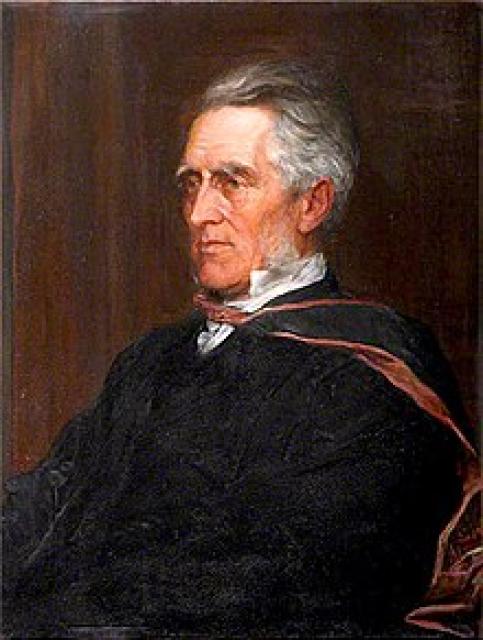
Henry Octavius Coxe
 Great Britain
Henry Octavius Coxe was an English librarian and scholar whose meticulous work helped make the Bodleian Library’s manuscript collections more accessible to generations of researchers. As Bodley’s Librarian at Oxford, he oversaw an immense catalogue project while also pursuing a parallel vocation as an Anglican clergyman. His expertise in palaeography, the study of historical handwriting, informed his research on medieval texts and manuscripts.
Early Life and Education
Coxe was born on September 20, 1811, at Bucklebury vicarage in Berkshire, the eighth son of the Reverend Richard Coxe. He was educated at Westminster School and entered Worcester College, Oxford, in 1830. He graduated in 1833, then began work in the manuscript department of the British Museum. Around the same time, he entered the Church of England ministry and served as a curate in London.
Career at the Bodleian
In 1838, Coxe became an under-librarian at the Bodleian Library, where he would spend the rest of his career. He was appointed head librarian, traditionally known as Bodley’s Librarian, in 1860. The position placed him in charge of one of Britain’s leading research libraries at a time when scholarly cataloguing was expanding access to its collections.
Coxe’s greatest institutional achievement was the preparation of a comprehensive catalogue of the Bodleian’s printed books, a project that filled more than 720 folio volumes. He also catalogued Greek manuscripts held by the Bodleian and manuscripts in Oxford’s colleges. His work as a palaeographer and editor of historical texts made him an important figure in nineteenth-century manuscript scholarship.
Research and Publications
In 1857, Coxe undertook a government-sponsored journey to inspect monastic libraries in the Levant. He examined collections in Cairo, Jerusalem and Patmos, locating significant Greek manuscripts. His findings appeared in a report published the following year. The journey also helped expose a forgery associated with Constantine Simonides, who had claimed to possess ancient manuscripts.
Coxe edited and published medieval works, including the chronicle of Roger of Wendover and a French historical poem about the Black Prince by the Chandos Herald. His catalogue work, editions and report on Greek manuscripts reflected a scholarly career devoted to preserving, describing and contextualizing historical sources.
Ministry and Legacy
Alongside his library responsibilities, Coxe served in parish ministry near Oxford and became rector of Wytham in 1868. He was also chaplain to Corpus Christi College and held other university and church appointments. Coxe died in Oxford on July 8, 1881. His lasting legacy rests on the enduring catalogues he compiled and on the practical, scholarly stewardship he brought to the Bodleian during more than four decades of service.