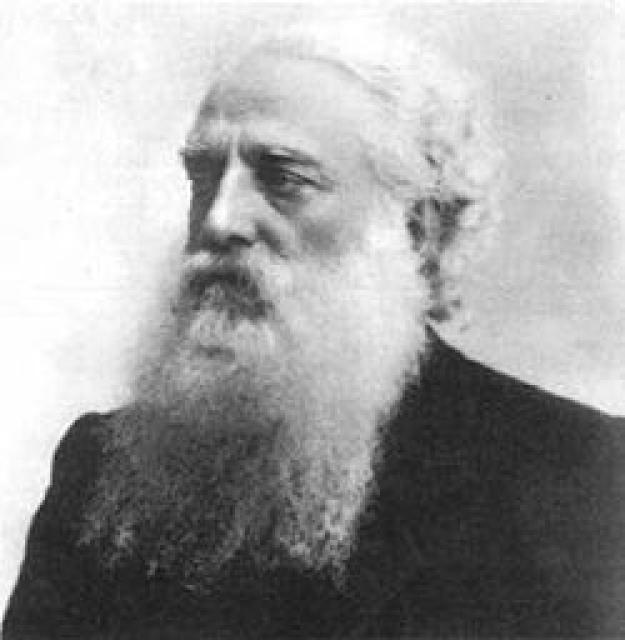
Henry Olkott
 USA
USAColonel Henry Steel Olcott: Founder and Leader of the Theosophical Society
Born in New Jersey in 1832, Henry Steel Olcott grew up on his father's farm. He later attended the College of the City of New York and Columbia University.
Service and Civil War
In 1860, Olcott married Mary Epplee Morgan and later had three sons. He became an editor for the New York Tribune's agricultural section before serving in the U.S. Army during the Civil War. He attained the rank of colonel and worked as a special commissioner for the U.S. Navy Department.
Interest in Spiritualism
Olcott's interest in spiritualism led him to investigate the Eddy brothers' séances, where he met Helena Blavatsky in 1874. He later wrote a series of articles on his experiences.
Theosophical Society
In 1875, Olcott, Blavatsky, and several others formed the Theosophical Society. The following year, they moved its headquarters to India. Olcott remained in India, dedicating his life to the Society's mission.
Legacy in Sri Lanka
Olcott's work in India helped revive Buddhism, earning him respect in Sri Lanka. He established several Buddhist schools, including Ananda College, Nalanda College, Dharmaraja College, and Visakha Vidyalaya.
Publications
Olcott's publications include:"Sorgho and Imphee, the Chinese and African Sugar Canes" (1857)
"A Buddhist Catechism" (1881)
"The Hindu Dwaita Catechism" (1886)
"The Golden Rules of Buddhism" (1887)
"The Life of the Budha and its Lessons" (1912)
Leadership and Legacy
After Olcott's death in 1907, the leadership of the Theosophical Society passed to Annie Besant. He remains an influential figure in theosophy and is remembered for his contributions to Buddhism in Sri Lanka.