Henry Palmerston
 Great Britain
- Henry John Temple, 3rd Viscount Palmerston
- Early Political Career
- Foreign Secretary Under Several Governments
- Diplomatic Triumphs
- European Equilibria and Revolution
- Crimean War
- Later Career and Legacy
Henry John Temple, 3rd Viscount Palmerston
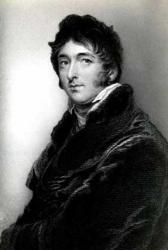
Early Life and EducationBorn into an aristocratic family on October 20, 1784, Henry John Temple was the third Viscount Palmerston. His grandfather and father were not actively involved in politics but served in the British Parliament. Palmerston received a traditional education for British aristocrats, attending Harrow School, where he befriended Lord Byron and Sir Robert Peel. He went on to study at the University of Edinburgh, Trinity College Cambridge, and finally obtained a Bachelor of Arts degree in 1805.
Early Political Career
After four unsuccessful attempts, Palmerston entered the House of Commons in 1807. He was appointed Secretary at War in 1809 and held the position for nearly two decades, earning a reputation for his diligence, energy, and integrity.
Foreign Secretary Under Several Governments
In 1830, Palmerston was appointed Foreign Secretary in the government of Earl Grey. He served in this role under Grey, Lord Melbourne, and Lord Russell for extended periods, with interruptions in 1834 and 1841-1846. As Foreign Secretary, Palmerston supported liberal movements and played a key role in the formation of the Kingdom of Belgium.
Diplomatic Triumphs
Palmerston's diplomacy was instrumental in resolving the Spanish Civil War in 1834. He also played a significant role in the establishment of a neutral Belgium by securing the signing of a treaty with France, Great Britain, Portugal, and Spain. Furthermore, he advocated for the Ottoman Empire, fearing Russian and French influence. His diplomatic efforts led to the signing of the London Straits Convention in 1841, which declared the Dardanelles and Bosphorus as Turkish waters.
European Equilibria and Revolution
Palmerston believed in maintaining the European balance of power, seeing it as a way for Britain to protect its interests without committing to large-scale military action. He supported European revolutionaries, viewing them as opponents of absolutism but remained cautious and unwilling to intervene directly.
Crimean War
In 1855, the 70-year-old Palmerston finally became Prime Minister. He formed a special war committee to oversee the Crimean War, encouraging allies to increase their contributions and seeking new allies, such as Piedmont. Palmerston's diplomacy helped secure a favorable peace treaty for Britain in 1856.
Later Career and Legacy
Palmerston's premiership ended with his resignation in 1858, but he remained involved in politics. He briefly returned to power as Prime Minister from 1859-1865. Palmerston's legacy lies in his unwavering belief in the European balance of power and his ability to advance British interests through skillful diplomacy. He is often remembered as a "great" foreign minister who helped maintain peace in Europe while expanding Britain's global influence.