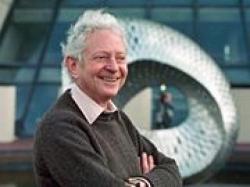
Henry Way Kendall
 USA
USA- Henry W. Kendall
- Early Life and Education
- Breakthrough Research
- Nobel Recognition
- Later Career and Legacy
- Tragic End
- Legacy
Henry W. Kendall
Nobel Laureate in PhysicsAmerican physicist Henry W. Kendall made significant contributions to the field of particle physics, earning him the Nobel Prize in Physics in 1990.
Early Life and Education
Born in Boston in 1926, Kendall displayed a keen interest in science from an early age. He earned a bachelor's degree in physics from Amherst College in 1948 and a doctorate in physics from the Massachusetts Institute of Technology in 1955.
Breakthrough Research
In the 1960s, Kendall collaborated with Jerome Friedman and Richard Taylor on groundbreaking experiments on the deeply inelastic scattering of electrons on protons and bound neutrons. Their findings provided crucial evidence for the existence of quarks, the fundamental building blocks of matter.
Nobel Recognition
For their pioneering work, Kendall, Friedman, and Taylor were jointly awarded the Nobel Prize in Physics in 1990. Their research revolutionized our understanding of particle physics and solidified the quark model as a cornerstone of the field.
Later Career and Legacy
After receiving the Nobel Prize, Kendall continued his research at the Massachusetts Institute of Technology. He made significant contributions to the development of the theory of quantum chromodynamics, which describes the interaction of quarks and gluons.
Tragic End
In 2002, Kendall died at the age of 76 while on a scuba diving expedition in Wakulla Springs State Park, Florida. His passing was a tragic loss for the scientific community.
Legacy
Henry W. Kendall's groundbreaking research helped lay the foundation for modern particle physics. His contributions have had a profound impact on our understanding of the fundamental nature of matter and continue to inspire generations of scientists.