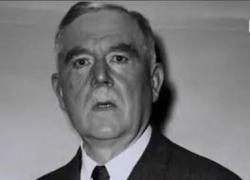
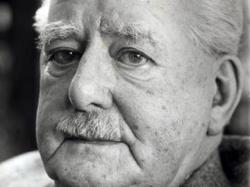
Herberts Cukurs
 Latvia
- Biography of Herbert Cukurs
- The Aviator
- The Journey to Gambia
- The Fall from Grace
- The Nazi Collaborator
- The Escape to Brazil
Biography of Herbert Cukurs
Latvian pilot, engineer, journalist. There were plenty of executioners in Latvia, but one of them deserves a more detailed story. This is Herbert Cukurs. He managed to become a hero of Latvia and at the same time its shame. Captain of the Latvian Air Force, Herbert Cukurs entered history twice. Before the war, he was as significant for Latvia as Valery Chkalov for the USSR or Charles Lindbergh for the USA. During the war, Cukurs, a member of the SS, exterminated people of "inferior races".
The Aviator
In the 1920s, the world became fascinated with "avietes" - homemade airplanes with engines up to one hundred horsepower. Thousands were built. In 1926, Lieutenant Cukurs, a native of Liepaja, became interested in this field. Before that, he had built an "Ausēklītis" aviete with a 9-horsepower engine, but it was not suitable for serious flights. Lieutenant Cukurs devoted all his efforts to the new aircraft, and in 1930, the C-3 with an 80-horsepower engine, assembled from two 1916 Renault fighter engines, was ready.
The Journey to Gambia
In the early summer of 1933, pilots Pulins and Celms attempted an unsuccessful flight to Gambia, located in Central Africa. Many were discouraged by this, as they did not believe that Latvia could compete with the great powers. And during this period of "great despair," news suddenly spread that Lieutenant Herbert Cukurs had flown to Gambia and was returning on his homemade plane, the C-3!
His flight began on August 28, 1933, and ended on May 25, 1934. Much time was spent traveling in the little-known Africa for Latvians at the time. Cukurs returned to Riga exactly ten days after the establishment of Karlis Ulmanis' dictatorship. Naturally, the dictator sought to extract maximum political capital from this, further contributing to Cukurs' fame, who was immediately promoted to captain.
For many Latvians, Cukurs became something like the Latvian Lindbergh and Jules Verne combined. The aviator's fame was also due to his writing abilities - upon his return, he published the diary "My Flight to Gambia." In 1937, he wrote the novel "Between Earth and Sun," where the main character is also a pilot. In his diary, Cukurs wrote: "In flight, you have to eat what you have, but when I return to Riga, I will definitely become a vegetarian... I am disgusted by the cruelty with which people destroy all living beings to satisfy themselves." These are the words of a man who had 30,000 lives on his conscience and whom later history would call the "Riga executioner".
The Fall from Grace
By the way, the surviving Jewish people of Liepaja remembered the Cukurs family as decent people. And their son... His pathological vanity played a role. He wanted to be a hero, to have fame, universal admiration, and... reverence. As a lieutenant in a country where there was no room for military heroics, he was determined but not a genius. He was not stupid but could not boast of education and deep knowledge. And being mediocre was humiliating!
His excessive vanity drove him to attempt a record-breaking flight and join the "Perkonkrusts". After all, a Nazi did not have to be better than others - it was enough to belong to the "right" race, and he would already be "superior" to the rest. But by 1940, his fame had faded, and there were no new achievements.
The Nazi Collaborator
The summer of 1940 came, and the Latvian army became part of the Soviet armed forces. What did a captain mean in the multi-million-strong Red Army? Who was Cukurs compared to Valery Chkalov?
Therefore, his decision to switch sides and join the Nazis in 1941 was a conscious choice. The ideas of the "superman" and having power over the lives of thousands of people were exactly what could satisfy Cukurs' vanity. He may not have been a bright hero like in 1934, but he was a dispenser of fate!
From there, everything went automatically. He started as an officer in the auxiliary police and ended up as the "master" of the Riga ghetto and the right-hand man of chief executioner Viktor Arajs.
It should be noted that within Arajs' group, to which he voluntarily joined, Cukurs enjoyed authority. He was assigned a personal car, which he used for punitive actions, while the other fighters traveled in confiscated blue city buses and trucks.
Cukurs loved to strike a pose. This is evidenced by his rides in the ghetto. Sitting in an open car, tightly wrapped in a leather cloak, he enjoyed shooting at Jews he encountered along the way, sincerely rejoicing with each hit.
The Escape to Brazil
Hitler's defeat was a tragedy for Cukurs - he could not count on leniency. He fled to Brazil. He lived a peaceful life as a citizen with his wife Milde and sons Gunars and Herbert near Sao Paulo. Using the gold he looted from the tortured Jews, he opened his private flight school and tour bureau.
Brazil at that time was not very interested in the past of immigrants and was a corrupt country. Therefore, Cukurs easily obtained documents stating that not only he but also his father were native Brazilians. It is not surprising that "Nazi hunters" could not find him for a long time.
Only many years later, agents of the Israeli intelligence agency Mossad managed to find the "Riga executioner". They wanted to extradite him, like Adolf Eichmann, the Nazi "specialist on Jews," to Israel for trial. One of the agents pretended to be an SS officer and, "warning" Cukurs of the danger, advised him to flee to Uruguay. A crate was even prepared - they planned to sedate Cukurs and smuggle him out.
The operation failed in Montevideo - Cukurs suspected that something was amiss. Therefore, Mossad decided to eliminate him on the spot, which was done on February 23, 1965.
On March 6, his body and the crate were discovered by the Uruguayan police.
According to another version, Cukurs was tracked down in Brazil by a miraculously surviving Jew from the Riga ghetto. He managed to gain his trust, offered to become his companion, and then, seizing the opportunity, shot him.