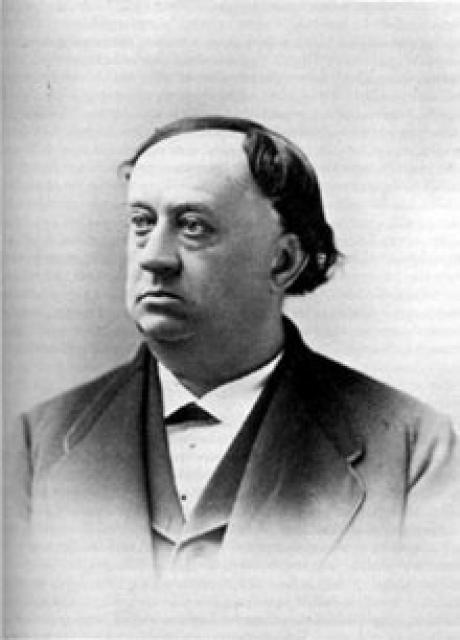
Herman Hagen
 Germany
- Early Life and Education
- Expeditions and Medical Practice
- Professor of Entomology
- Notable Contributions
- Honors and Recognition
Early Life and Education
In 1836, Hermann August Hagen entered the medical faculty of the University of Königsberg. Alongside his medical studies, he attended lectures by renowned zoologists Karl Ernst von Baer and Karl Theodor Ernst von Siebold.
Expeditions and Medical Practice
In 1839, Hagen accompanied Professor Heinrich Rathke on an expedition to Norway, Sweden, and Denmark. He studied marine fauna and entomological collections in these countries. He received his doctorate in medicine in 1840 for his dissertation on European dragonflies.
After practicing medicine in Berlin, Vienna, and Paris, Hagen returned to Königsberg in 1843. He continued his medical practice while serving as first assistant at a surgical clinic. Despite his busy schedule, he published significant entomological works.
Professor of Entomology
In 1867, Hagen became head of the entomological department at the Museum of Comparative Zoology in Cambridge, Massachusetts. In 1870, he was appointed Professor of Entomology at Harvard College.
Notable Contributions
Hermann August Hagen made significant contributions to entomology, particularly in the study of net-winged insects. He established a widely accepted system of classification for this order and monographed many of its families. He also resolved the complex synonymy of numerous species.
In addition to his work on net-winged insects, Hagen compiled an extensive "Bibliotheca Entomologica," listing all entomological publications up until 1862. This reference became invaluable to researchers worldwide.
Honors and Recognition
Hagen received honorary doctorates from the University of Königsberg in 1863 and Harvard University in 1887. He was internationally renowned for his entomological work and left a lasting legacy in the field.