
Herman Wouk
 USA
USABiography of Herman Wouk
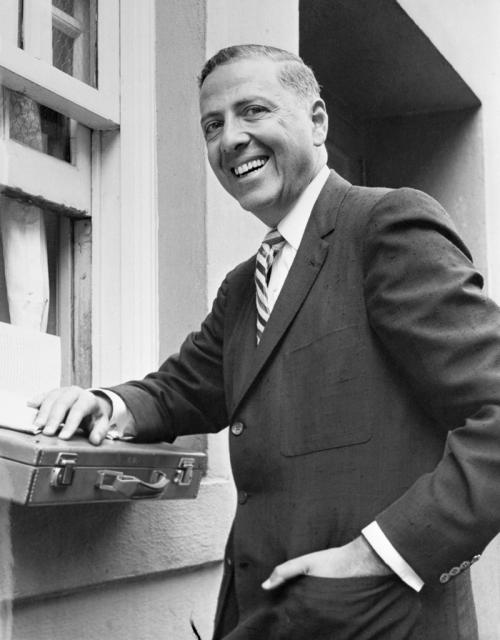
Herman Wouk is an American writer known for his extensive military novels based on American history. He was awarded the Pulitzer Prize for his novel "The Caine Mutiny" in 1951. Wouk's works have been translated into 27 languages. "The Washington Post" referred to Wouk as the "elder statesman of American historical novelists" who guarded his private life. Historians, writers, publishers, and critics gathered at the Library of Congress in 1995 to celebrate Wouk's 80th birthday and dubbed him the "American Tolstoy".
Early Life and Career
Herman Wouk was born on May 27, 1915, in Bronx, NY, to Esther and Abraham Isaac, Russian Jewish immigrants from present-day Belarus. His father worked hard to lift the family out of poverty before opening a profitable laundry business. At the age of 13, Wouk's maternal grandfather, Mendel Leib Levin, arrived from Minsk to live with his grandson and introduce him to the principles of Judaism. Initially, Wouk was disappointed to learn how long he would have to study the Talmud. However, his father advised him to embrace the teachings, stating that if he could say only one thing on his deathbed, it would be to study the Talmud. Wouk took his father's advice to heart and, after a brief period of secular life, returned to practicing his religious beliefs. Judaism became an integral part of his life and career. Wouk later claimed that his grandfather and the U.S. Navy had the most significant influence on his life.

Education and Military Service
In 1934, Wouk obtained a bachelor's degree from Columbia University, where he edited the student humor magazine "Columbia Jester". He soon began working on radio dramas, initially with David Freedman's show "Joke Factory" before moving on to Fred Allen. After the Japanese attack on Pearl Harbor, Wouk joined the United States Navy and served in the Pacific Theater during World War II. He gained valuable experiences that he later described as educational. Wouk served on board two high-speed minesweepers, the USS Zane and the USS Southard, becoming the latter's executive officer. He participated in eight offensive operations and received several battle stars.
Literary Career and Later Life
During his free time in the navy, Wouk wrote his novel "Aurora Dawn". He sent several early chapters to his former philosophy professor, Irwin Edman, at Columbia University. The book was published in 1947, followed by his second novel, "City Boy", which initially faced commercial disappointment in 1948. Wouk once attributed the lack of success for "City Boy" to Norman Mailer's bestselling novel, "The Naked and the Dead". While working on his next work, "The Caine Mutiny", Wouk read each new chapter to his wife after completion. At one point, his wife remarked that if people did not like this novel, Wouk should consider changing his field. This statement later found its way into his book "Youngblood Hawke" in 1962 through the character of editor Ginny Fry. "The Caine Mutiny" was published in 1951 and won Wouk the Pulitzer Prize. It was adapted into a film by Columbia Pictures, with the legendary Humphrey Bogart playing the role of Captain Philip Francis Queeg of the fictional destroyer USS Caine.

In the 1970s, Wouk published two monumental novels, "The Winds of War" and its sequel, "War and Remembrance", which depicted the devastating aftermath of the Holocaust. Both novels were adapted into miniseries, with the first airing in 1983 and the second in 1988. Wouk dedicated "thirteen years of colossal research and composition" to these novels, as noted by journalist Arnold Beichman.
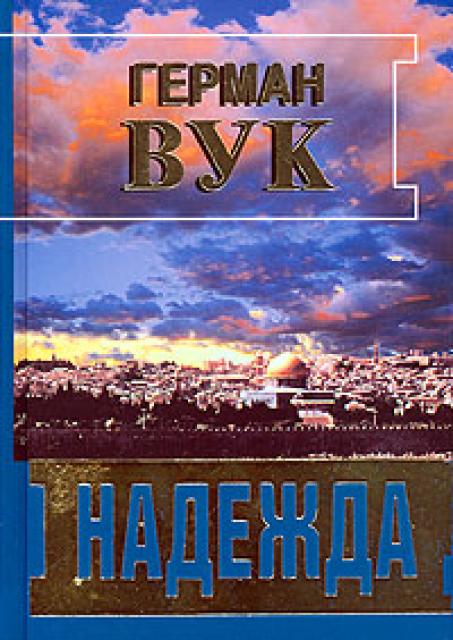
Throughout the remaining decades of his literary career, Wouk focused on writing about Jews, Israel, Judaism, and science. His notable works include "Inside, Outside" (1985), which tells the story of four generations of a Russian Jewish family and their struggles in Russia, the United States, and Israel, and "The Hope" (1993) and its sequel "The Glory" (1994), which are historical novels covering the first 33 years of Israel's history. Wouk also wrote "The Will to Live On: This is Our Heritage" (2000), a sweeping tour through Jewish history, and "This is My God", a comprehensive exploration of key aspects of Judaism.
Personal Life and Legacy
In late 1944, Herman Wouk met Protestant Betty Sarah Brown, who later converted to Judaism on her 25th birthday after becoming interested in Wouk's faith. The couple married on December 10, 1945. They had two sons, Abraham Isaac, who tragically drowned in a swimming pool shortly after his fifth birthday, and Nathaniel, born in 1950, who became a writer after graduating from Princeton University. Their third son, Joseph, was born in 1954. He became a lawyer, film producer, and screenwriter after graduating from Columbia University. Betty Sarah passed away on March 17, 2011. Following her death, Wouk stated, "I never wrote anything that mattered until I met Sarah."
In January 2016, Wouk released his autobiographical memoir, "Sailor and Fiddler: Reflections of a 100-Year-Old Author", to commemorate his 100th birthday. NPR hailed the book as a "beautiful coda to the career of a man who made American literature kinder, smarter, and more welcoming."


