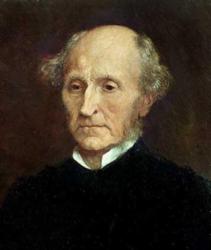
Hermann Cohen
 Germany
- Hermann Cohen: Idealist Philosopher and Pioneer of Judaism
- Early Life and Education
- Academic Career
- Philosophical Contributions
- Ethics and Judaism
- Legacy in Judaism
- Conclusion
Hermann Cohen: Idealist Philosopher and Pioneer of Judaism
Born in Coswig, Germany, Hermann Cohen was a prominent German-Jewish philosopher and the founder of the Marburg School of Neo-Kantianism.
Early Life and Education
Cohen completed his secondary education in Dessau and attended the Jewish Theological Seminary in Breslau (now Wrocław). He pursued higher studies at the universities of Breslau, Berlin, and Halle, graduating with a dissertation on Kant's theory of experience.
Academic Career
In 1873, Cohen joined the University of Marburg, where he dedicated himself to the study of Kant's philosophy. He became a professor in 1876 and continued teaching at Marburg until his retirement in 1912. Despite holding a prestigious position in Marburg, Cohen later moved to Berlin, where he lectured and led seminars at the Hochschule für die Wissenschaft des Judentums until his passing in 1918.
Philosophical Contributions
Cohen developed a systematic interpretation of Kant's philosophy, using and expanding upon the transcendental method. He argued that thought not only forms the structure but also creates the content of knowledge. According to Cohen, the objects of our cognition are mental constructs.
Cohen reinterpreted Kant's "thing-in-itself" as an immanent goal of knowledge rather than an objective reality existing independently of our understanding. Perception only points to problems that reason must grapple with. He saw mathematics, especially the calculus, as a paradigm for cognition—an infinite process that perpetually approaches but never reaches its limit.
Ethics and Judaism
Cohen believed that ethics was the logic of the will, emphasizing its primacy over science, as Kant had argued. Human dignity played a central role in his ethical system. Cohen supported ethical socialism but rejected historical materialism and atheistic tendencies within the labor movement.
Legacy in Judaism
Besides his philosophical contributions, Cohen played a significant role in Jewish thought. He co-founded the Society for the Advancement of Judaistic Studies and published works on Jewish themes and the cultural significance of Judaism. His posthumous writings included works on the religion of reason from Jewish sources, Germanism and Judaism, and the ethics of Maimonides.
Conclusion
Hermann Cohen remains an influential figure in the history of philosophy and Judaism. His pioneering interpretations of Kant and his work on the cultural and ethical dimensions of Judaism continue to inspire scholars and practitioners alike.