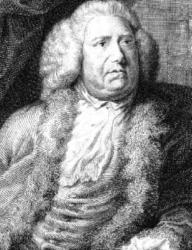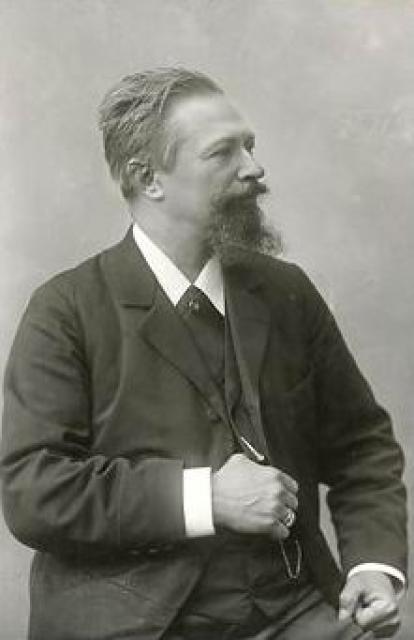
Hermann Gradener
 Austria
- Karl Grädener: Life and Career
- Education and Early Career
- Teaching Career
- Compositions and Critical Reception
- Relationship with Gustav Mahler
- Criticisms and Legacy
Karl Grädener: Life and Career
Karl Grädener was an Austrian composer, violinist, and music teacher. He was born in Vienna, the son of Carl Grädener.
Education and Early Career
Grädener studied at the Vienna Conservatory (1862). From 1864 to 1869, he played violin in the Vienna Opera Orchestra.
Teaching Career
In 1873, Grädener began teaching at Horak's Piano School. In 1877, he joined the faculty of the Vienna Conservatory. In 1884, he became a professor. In 1899, he succeeded Anton Bruckner as Chair of Harmony and Counterpoint at the University of Vienna.
Compositions and Critical Reception
Grädener was a conservative composer. His works include the opera "Die Heilige Zita" (1918), a symphony, a violin concerto, Variations for organ, trumpet, and string orchestra, and various chamber pieces. His two string quartets were highly regarded by his contemporaries.
Relationship with Gustav Mahler
Gustav Mahler praised Grädener's early piano quartet (which was later lost). Grädener arranged a private performance of the quartet in Vienna. However, Mahler was less enthusiastic about Grädener's music when he became director of the Vienna Opera, rejecting his opera "Die Heilige Zita."
Criticisms and Legacy
Moritz Rosenthal reported that Johannes Brahms, who had collaborated with Grädener's father, made scathing remarks about the younger Grädener. Rosenthal attributed this to envy. Grädener's music is not widely known today, but his contributions to the musical life of Vienna in the late 19th and early 20th centuries are significant.