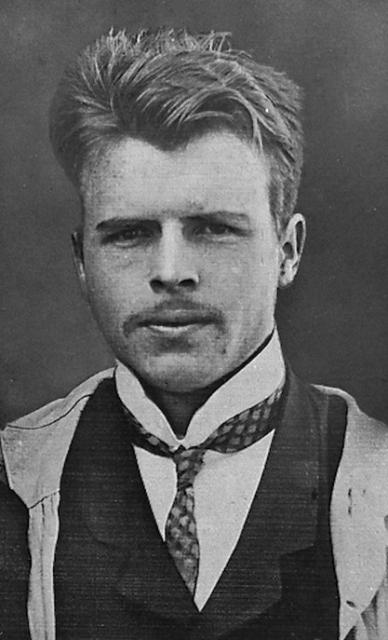
Hermann Rorschach
 Switzerland
Biography of Hermann Rorschach
Early LifeHermann Rorschach was born in 1884 in Zurich, Switzerland. He was the eldest of three children in a family of artist Ulrich Rorschach. His childhood was spent in Schaffhausen, a town in northern Switzerland. When he was 12 years old, his mother passed away, leaving him an orphan at the age of 18.
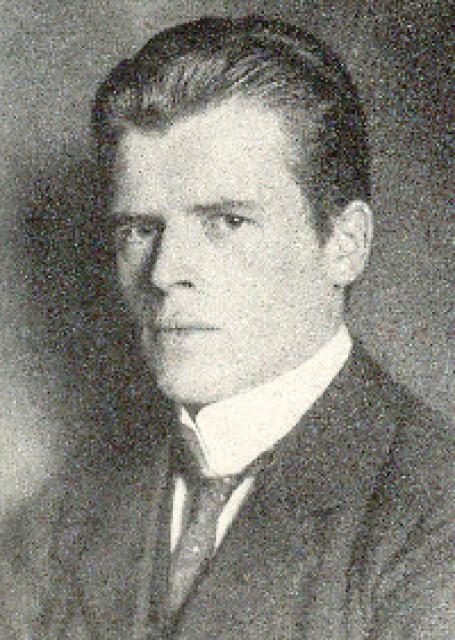
Education and Career
After completing his secondary education, Hermann decided to study medicine. Interestingly, he was given the nickname "Inkblot" in school due to his love for inkblots and their variations. It is unclear whether this nickname was a mere coincidence or played a role in his later fame for the Rorschach test. Regardless, Hermann developed a deep interest in psychiatry during his studies at the University of Zurich. He attended lectures by Ernst Haeckel and was mentored by renowned psychiatrist Carl Jung. In those years, it was common for students to study at multiple universities before returning to their home university for their degree. After several years of studying at various universities in Europe, including Germany and Russia, Hermann Rorschach returned to Zurich in 1909 and successfully passed his exam to become a doctor.
Personal Life and Contributions
During his academic years, Hermann was highly respected by his peers. He was known for his honesty, reliability, and engaging conversations. He had a passion for reading and art, enjoying activities such as drawing, theater, and walking or boating by the lake in his free time. Additionally, he had a love for mountains, although he didn't have much time for mountaineering. During his studies, he met and became engaged to Olga Stempelin, a Russian medical student. They married in 1910 and later had two children. Hermann and his wife traveled to Russia, where he attempted to find suitable employment but was unsuccessful.
Later on, Hermann Rorschach worked in psychiatric clinics in Switzerland and Germany. Despite not amassing a fortune, he dedicated himself to research during his practice. He delved deep into understanding psychological deviations, which led him to develop the Rorschach test. His patient case histories differed significantly from those of his colleagues, as he strived to go beyond common practices of the time. Throughout many years, he tested both healthy and ill patients, gradually refining his research into a comprehensive scientific work. In 1921, he published his groundbreaking work, a psychodiagnostic test for personality assessment, which included ten inkblot plates. These plates served as a stimulus for associations made by the examinees. The work became known as the Rorschach test and cemented Hermann Rorschach's name in the history of psychiatry and psychology.
Even after its publication, Hermann continued to refine his test, declaring that the original plates had become "outdated" and that he would soon propose new ones. However, fate had a different plan. In April 1922, at the age of 37, Hermann Rorschach tragically passed away from peritonitis. Doctors later regretted that if Hermann had sought help earlier for his abdominal pain, he could have been saved. According to his wife, Hermann was remarkably impractical and never sought to turn his research into monetary gain. In fact, he earned only 25 francs from his famous test.


