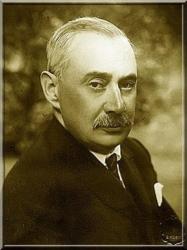
Herve Bazin
 France
Biography of Hervé Bazin
Hervé Bazin (April 17, 1911 - February 17, 1996) was a French writer, the president of the Goncourt Academy (since 1977), and a recipient of the International Lenin Prize (1980). Born in a small town called Angers, located on the banks of the Men river, 300 kilometers southwest of Paris, on April 17, 1911, Jean-Pierre Hervé Bazin came from a wealthy bourgeois-aristocratic family. His father was a professor at the Catholic University in Angers, and his mother, in particular, took pride in their family's contributions to France, which included several successful businessmen, officers, lawyers, a bishop, and a member of the French Academy. This title was bestowed upon his maternal grandfather, René Bazin, who was the author of religious and moralistic works. Against this backdrop of family fame, young Hervé seemed like an "ugly duckling" to his domineering and cruel mother: too stubborn, independent, and daring to rebel against the established order in their household. He even considered the household staff to be equal to their masters.
A Rebel in Search of His Path
The "rebel" was sent to a closed Catholic school for reeducation, then to another, and was forced to enroll in law school despite his inclination towards literature. Eventually, he was reluctantly placed as a clerk in a factory owned by a wealthy relative, and there (oh, the horror!) he committed an outrageously scandalous act: he married a simple, not-so-wealthy girl. Scandalized and offended in their deepest sensibilities, his family completely turned their backs on Hervé Bazin, who, in turn, was glad to sever ties with his despotic and arrogant clan. The twenty-two-year-old rebel became a student at the Sorbonne's Faculty of Philology while also earning a living as a newspaper chronicler. However, fate laughed cruelly at the proud young man. His wife left him with their child, leaving him as a destitute student. Hervé Bazin experienced a severe nervous breakdown, suffered from a prolonged illness, and barely made ends meet. In search of income, he had to try his hand at various professions: he was a street vendor, a garbage collector, a carpenter, and a locksmith.
Entering the Literary Arena
Hervé Bazin entered the literary arena even before the World War II. Starting as a journalist and chronicler, in the 1930s he published his first poetry collections and an unsuccessful novel. At the age of 29, Bazin found himself on the frontlines. During the tragic days of France's defeat in the spring of 1940, the writer narrowly avoided being captured. "Wounded," Bazin recalled, "I found myself between French and German trenches. The firefight continued. Death had never been so close to me. In the canvas tent where they carried me from no man's land, they later discovered three bullet holes. If you survive such an experience, you can say you have looked death in the face. War gives nothing; it only takes." During the years of fascist occupation of France, he joined the left wing of the Resistance movement and participated in the liberation of Paris. After the war, in 1946, Bazin, along with other young writers, poets, and artists, founded the journal "La Cocarde." In 1947, he was awarded the Guillaume Apollinaire Prize for his poetry collection "Din," which included his best poems. In 1948, the writer released the novel "The Snake in the Fist," which brought him genuine fame. A survey conducted in 1956 by the newspaper Nouvelle Littéraire attested to Bazin's immense popularity among readers, as he was recognized as the "best novelist of the past decade." By that time, he had already published the novel "Head Against the Wall" (1949), the second book in the Reso family trilogy, "The Death of the Little Horse" (1950), the collection of short stories "The Marriage Bureau" (1951), the novels "Stand Up and Go" (1952), "Oil on Fire" (1954), and "Whom I Decide to Love" (1956). In the 1960s and 1970s, he published several more books, including the novel "For the Sake of a Son," the collection of short stories "Hats Off," the novels "Marital Life," "The Lucky Ones from the Isle of Despair," "The Cry of the Owl," "Anatomy of Divorce," and the novella "And Fire Consumes Fire." In 1957, Hervé Bazin was awarded the Grand Literary Prize of the French Academy, and a few months later, he was elected a member, and from 1973 - the president of the Goncourt Academy. According to a representative survey, he was recognized as the most read writer in France in 1985.