Su Manshu
 China
China- Biography of Su Manshu
- Education and Revolutionary Activities
- Explorations in Buddhism and Literary Career
- Literary Contributions and Linguistic Abilities
- Legacy and Impact
Biography of Su Manshu
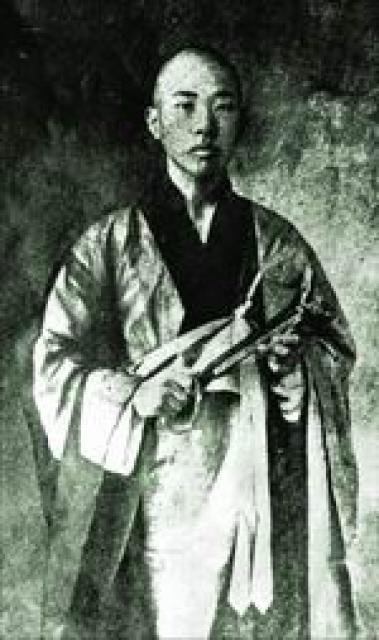
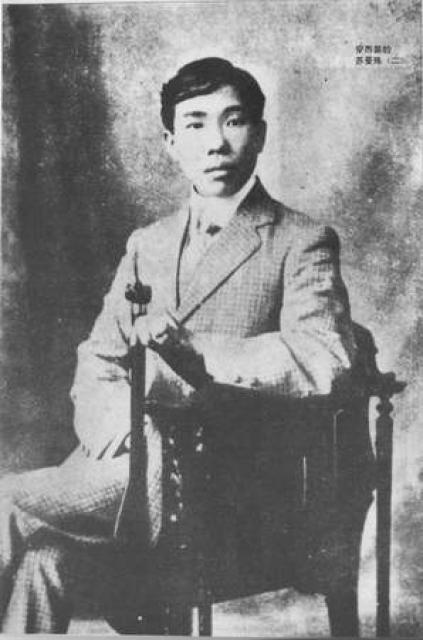
Su Manshu was a Chinese writer, translator, artist, social activist, journalist, and educator. He was born in 1884, the son of a Chinese merchant who lived in Japan and his Japanese servant. After spending his early years in the humiliation of his adoptive father's family, he was sent to his father's homeland in Guangdong, China in 1889, while his mother remained in Japan.
Education and Revolutionary Activities
Su Manshu received his education in rural schools in Guangdong and later in Shanghai. In 1898, he continued his studies at a school founded by Kan Yawen. In 1902, he went to Tokyo, where he became involved in three Chinese revolutionary circles. It is believed that it was in one of these circles that he met Chen Duxiu, who taught him classical Chinese poetry. In 1903, Su Manshu traveled to Shanghai and joined the revolutionary movement. He became an active publicist, contributing articles to opposition newspapers such as "Minbao" and "Zhongguo Jibao."
Explorations in Buddhism and Literary Career
During this period, Su Manshu also explored Chinese Buddhism, which incorporated socialist, anarchist, nationalist, and revolutionary influences of the time. He took monastic vows three times: at the age of 12, in 1899, and in 1903. His monastic name, Manshu, was derived from the Bodhisattva Manjushri. From 1904 to 1912, Su Manshu traveled extensively throughout China and Buddhist countries, including India and Java. In 1908, he developed a fascination with the poetry of Lord Byron and actively translated the works of European romantics into Chinese.
Literary Contributions and Linguistic Abilities
Su Manshu made his literary debut with the unfinished autobiographical novel "The Lonely Swan" in 1912, which tells the tragic love story of a young Buddhist monk. This work, along with his novellas "The Cherry Blossom Veil," "The Saber," "The Broken Hairpin," and "This Is Not a Dream," showcases his exploration of complex love and family relationships, as well as his social criticism. He was known for his linguistic abilities, as he was proficient in Sanskrit, Japanese, English, and French. He translated Kalidasa's "Shakuntala" into Chinese and classical Chinese poetry into English.
Legacy and Impact
Su Manshu's literary talents, translations, knowledge, and lifestyle made him a cult figure and legendary figure in the youth literary circles of his time. He was considered a precursor and harbinger of the 1917 revolution in Chinese literature. In 1987, a memorial plaque was installed in his honor at Yokohama Chuukagakuin, where Su Manshu studied for four years in his early youth. His poetry, particularly his famous poem "The Shakuhachi Flute," continues to be celebrated by the Chinese diaspora.