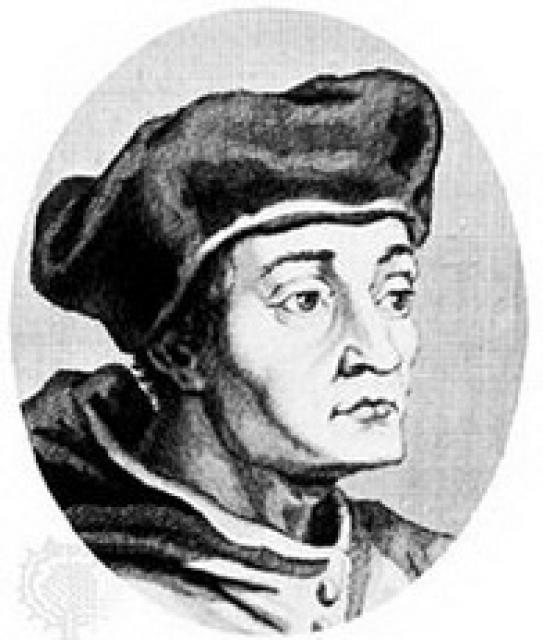
Hieronymus Aleander
 Italy
Italy- Cardinal Lorenzo Pucci: A Pivotal Figure in the Reformation Era
- Academic Achievements
- Diplomatic and Ecclesiastical Career
- Anti-Reformation Crusader
- Cardinalate and Legacy
Cardinal Lorenzo Pucci: A Pivotal Figure in the Reformation Era
Early Life and EducationLorenzo Pucci, born in Florence around 1458, was an Italian humanist, scholar, and cardinal. Initially pursuing medicine, he later transitioned to theology and philology. His exceptional intellect earned him recognition at the court of Pope Alexander VI.
Academic Achievements
In 1489, Pucci taught in Venice, where he befriended Erasmus and Aldus Manutius. His renowned "Lexicon graeco-latinum" (1512), a comprehensive Greek-Latin dictionary, cemented his status as a leading scholar of the era. He also published a Greek grammar and several poetic works.
Diplomatic and Ecclesiastical Career
Pucci's diplomatic skills were recognized by the papacy, sending him on missions to Hungary and France. In 1516, he joined the court of Leo X, serving as librarian in the Vatican. His diplomatic acumen played a significant role in the condemnation of Luther at the Diet of Worms in 1520.
Anti-Reformation Crusader
As a staunch opponent of the Reformation, Pucci played a pivotal role in suppressing Protestantism. He condemned two monks as heretics in the Netherlands and opposed peaceful resolutions between Catholics and Protestants in Germany.
Cardinalate and Legacy
In 1536, Pope Paul III secretly appointed Pucci as a cardinal in pectore, publicly announcing it two years later. His unfinished treatise "De Concilio habendo" provided valuable insights into the Council of Trent. Pucci's correspondence and diplomatic records serve as historical accounts of the religious upheavals of his time.


