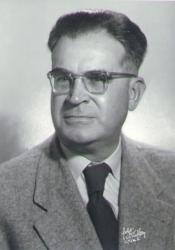
Hilaire Belloc
 Great Britain
- Hilaire Belloc: A Life of Wit, Faith, and Controversy
- Early Life and Education
- Military Service and Oxford
- Literary and Political Career
- Controversies and Debates
- Faith and Catholicism
- Distinctiveness and Legacy
- Personal Life and Death
Hilaire Belloc: A Life of Wit, Faith, and Controversy
Hilaire Belloc, a prolific English writer of the early 20th century, was known for his staunch Catholicism, sharp intellect, and diverse literary talents.
Early Life and Education
Belloc was born in Saint-Cloud, France, to a French father and English mother. His childhood was spent in England's West Sussex, where he developed a deep love for the countryside that would later inspire his writing. He attended the Oratory School in Birmingham, where he excelled in history.
Military Service and Oxford
Upon graduating, Belloc completed his military service as a French citizen in an artillery unit near Toul. Possessing exceptional physical endurance, he was an avid walker who traversed England and continental Europe. After his military service, he matriculated at Balliol College, Oxford, where he earned honors in history.
Literary and Political Career
Belloc embarked on a prolific writing career, authoring over 150 books and countless articles. His works encompassed history, biography, poetry, fiction, and essays. His most famous works include "The Path to Rome," an account of his pilgrimage from France to Italy; "The Servile State," a critique of modern capitalism; and "Europe and Faith," a defense of Catholicism.
Belloc also ventured into politics as a Liberal Member of Parliament for South Salford from 1906 to 1910. However, he quickly became disillusioned with party politics. He collaborated closely with fellow writers G.K. Chesterton and Bernard Shaw, forming the "Chesterbelloc" alliance.
Controversies and Debates
Belloc was a vocal critic of various ideologies, including socialism, communism, and secularism. He engaged in heated debates with intellectuals such as Herbert Wells and George Coulton. His controversial views on history, religion, and politics often sparked intense reactions.
Faith and Catholicism
Belloc's unwavering faith in Catholicism profoundly influenced his writing. He believed that the Catholic Church was the focal point of Western civilization and a source of moral guidance. His religious beliefs informed his social and political outlook, advocating for a society rooted in Christian principles.
Distinctiveness and Legacy
Belloc's unique style and conservative values set him apart from his contemporaries. His writings were often characterized by wit, satire, and a deep understanding of history and the human condition. He remains a controversial yet influential figure in English literature and intellectual history, inspiring both admiration and criticism.
Personal Life and Death
Belloc married American Elodie Hogan in 1896. They had five children, but Elodie tragically died in 1914 from influenza. Belloc suffered a stroke in 1941 and died on July 16, 1953, at the Catholic Hospital in Guildford, Surrey. He was buried at St. Mary's Church in West Grinstead, near his home in Shipley, Sussex.