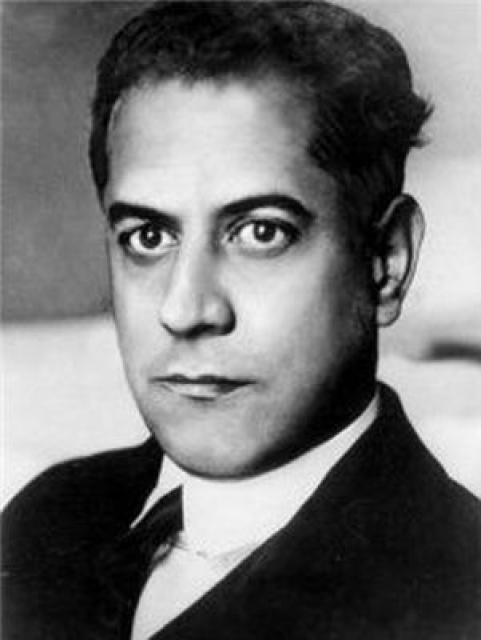
Hose Capablanka
 Cuba
Cuba- Biography of Jose Raul Capablanca
- Early Years and Rise to Prominence
- European Success and World Chess Champion
- Later Years and Legacy
Biography of Jose Raul Capablanca
Jose Raul Capablanca, born on November 19, 1888 in Havana, Cuba, was a Cuban chess player, diplomat, and the 3rd World Chess Champion (1921-1927). Capablanca's exceptional talent and skill left a lasting impression on his contemporaries and future chess champions.

Early Years and Rise to Prominence
Capablanca's interest in chess began at a young age when he observed his father playing. At the age of 13, he became the champion of Cuba by defeating X. Corzo in a match with a score of 7:6 (+4, -3, =6). Even at a young age, Capablanca displayed a deep understanding of positional play and an astonishing ability to calculate variations quickly.

In 1904, Capablanca moved to New York for university studies and became a frequent visitor to the Manhattan Chess Club. He achieved his first major success by winning a blitz tournament against Emanuel Lasker in 1906. His popularity in the United States soared after a convincing victory over the national champion, Frank Marshall, with a score of 15:8.
European Success and World Chess Champion
Capablanca's debut in Europe came at the San Sebastian international tournament in 1911, where he emerged as the winner ahead of almost all the strongest chess players of that time, including Lasker. This triumph allowed Capablanca to challenge Lasker for the World Chess Championship, but the match did not materialize.
In 1913, Capablanca participated in four tournaments, winning three in New York and finishing second in Havana. He also played an active role in the chess community during his appointment at the Cuban consulate in St. Petersburg in 1913, where he had successful encounters with prominent players such as F. Dus-Chotimirsky and Alexander Alekhine.
After the outbreak of World War I, Capablanca won three tournaments in New York, the Hastings tournament in 1919, and a match against Boris Kostic in Havana (1919; 5:0). During this time, his chess style gravitated towards seemingly simple positions that required intuition and virtuoso technique.
In 1921, Capablanca finally secured a match against Lasker for the World Chess Championship and convincingly won the title (+4, -0, =10). He showcased his mastery of the game by winning the prestigious London international tournament in 1922, which featured almost all the strongest chess players in the world, except Lasker.
Later Years and Legacy
Capablanca continued to participate in tournaments and matches in the following years, but his involvement became less frequent. In 1927, he faced Alexander Alekhine in a match for the World Chess Championship and suffered a defeat (+3, -6, =25). Despite this loss, Capablanca remained one of the strongest players in the world and achieved notable successes in tournaments such as Moscow (1928), Budapest (1928, 1929), and Hastings (1929/30).
After resuming his diplomatic career, Capablanca took a break from chess until the mid-1930s. He made a comeback with impressive performances in tournaments such as Moscow (1935), Margate (1935, 1936), and Buenos Aires Olympiad (1939), where he won the individual gold medal on the first board.
Capablanca's contributions to chess strategy, including his innovative methods of sidelining opponents' pieces and exploiting open lines and key squares, greatly influenced future generations of chess players. His books, known for their logical and clear explanations, also played a significant role in popularizing the game.
Jose Raul Capablanca passed away on March 8, 1942 in New York. His legacy as one of the greatest chess geniuses has continued to inspire and captivate chess enthusiasts around the world. The Capablanca Memorial tournaments have been held annually in Cuba since 1962, paying tribute to his remarkable contributions to the game.


