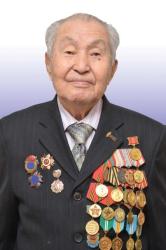
Hotsumi Ozaki
 Japan
Japan- Biography of Hotsuki Odzaki
- Early Life and Education
- Journalism and Espionage Activities
- Arrest and Execution
Biography of Hotsuki Odzaki
Hotsuki Odzaki was a Japanese communist, journalist, critic, and advisor to Prime Minister Fumimaro Konoe. He is known as an informant of Soviet spy Richard Sorge. As a result of his espionage activities, he was arrested and executed for treason against his country.
Early Life and Education
Hotsuki Odzaki was born to a former rural samurai family named Hotsuka Odzaki and Kita Nomura, the daughter of a minor samurai. He was born in the village of Shirakawa, Kamogun district, Gifu Prefecture, but at the time of his birth, his family lived in the Siba district of Tokyo (now Minato). Shortly after his birth, the family moved to Taiwan, so he grew up in Taipei.
After returning to Japan, Odzaki enrolled in the Law Faculty of the Tokyo Imperial University in 1922. During his studies, he became interested in Marxist and socialist ideas, but was a moderate supporter of them at the time. In March 1925, Odzaki completed his studies at the university with a major in political science. A year earlier, he had taken exams to enter the civil service, but failed them. After graduating from university, he decided not to wait for new exams and instead became a journalist.
Journalism and Espionage Activities
In May 1926, Odzaki became a correspondent for the Tokyo branch of the "Asahi Shimbun" newspaper, and a year later, in October 1927, at his own request, he was transferred to the Osaka branch. In the same year, he married Eiko Hirosa, the former wife of his older brother, from whom he divorced.
From 1926 to 1928, Odzaki's views became more leftist, influenced in particular by the incident on March 15, 1928, when over a thousand people, suspected of having ties to the Communist Party of Japan, were arrested by the police. Odzaki himself managed to avoid political pressure on the left, as he was sent to Shanghai as a special correspondent in November of the same year. During his three-year stay in Shanghai, Odzaki met Agnes Smedley, an American journalist known for her communist views, and Richard Sorge, who was working undercover as a journalist for the German magazine "Soziologische Magazin." Sorge and Odzaki found common ground in their views and quickly became friends.
In 1932, Odzaki returned to Japan, where extreme right-wing and fascist sentiments were growing. Two years later, these sentiments prompted Odzaki to reestablish contact with Sorge and accept his offer to collaborate with the Comintern (essentially, spying for the Soviet Union). After that, Odzaki worked with Sorge for 8 years, becoming his most valuable assistant in espionage activities.
In 1937, Odzaki was invited to join the "Sōwa Kenkyūkai" (Sōwa Research Society), a large group of intellectuals created around Prime Minister Konoe as a "think tank" oriented in the political sphere. The Sōwa Kenkyūkai advocated for the unity of Asian nations under Japanese hegemony, which in practice resulted in Japanese colonialism. Despite being a staunch Marxist, Odzaki supported the policy of colonialism, stating that Japan inevitably had to occupy a dominant position among other Asian countries due to economic reasons.
In 1938, Odzaki became one of the trusted members of the community, known as the "Breakfast Club," with whom Konoe discussed current issues on a weekly basis. His proximity to the highest levels of government allowed Odzaki to provide Richard Sorge with important information regarding the Japanese government's plans to enter World War II, making him Sorge's most valuable informant. Thanks to Odzaki, Soviet intelligence learned in September 1941 that Japan would not attack the USSR until the Germans captured Moscow; instead, Japan planned to start a war with Britain and the United States.
Arrest and Execution
On October 15, 1941, Odzaki was arrested in connection with the Sorge case. The court found that due to his proximity to the government apparatus, Odzaki had the opportunity to copy secret documents and pass information to third parties. He was charged with violating the law on state security and the law on the preservation of public order. While in prison, Odzaki wrote letters to his wife and daughter, which were later published as a book entitled "Love Like a Rain of Stars."
On November 7, 1944, Odzaki was hanged in the Sugamo Prison in Tokyo, a few hours before Sorge, becoming the only Japanese person executed for treason during the war. His body was handed over to his wife. In the 1960s, the Soviet government posthumously awarded Odzaki the Order of the Patriotic War, 1st Class.