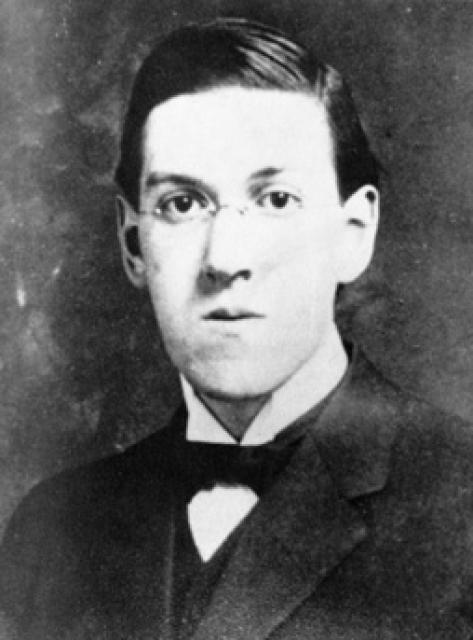
Howard Lovecraft
 USA
USA- Howard Phillips Lovecraft: The Master of Cosmic Horror
- Scientific Explorations and Literary Beginnings
- Personal Struggles and Literary Breakthrough
- Amateur Press Association and Literary Partnerships
- Later Years and Recognition
- A Legacy of Literary Darkness
Howard Phillips Lovecraft: The Master of Cosmic Horror
Early Years and InfluencesHoward Phillips Lovecraft was born on August 20, 1890, in Providence, Rhode Island, a city where he would reside for the majority of his life. His father, Winfield Scott Lovecraft, was a traveling salesman who suffered a mental breakdown during a business trip, ultimately being institutionalized and passing away in 1898. Lovecraft's mother, Sarah Susan Phillips Lovecraft, was a nervous woman whose grief over her husband's illness and death became intertwined with her love for her son, creating a disturbingly sadistic relationship.
Despite the challenges of his childhood, Lovecraft displayed extraordinary intellectual abilities. From an early age, he absorbed knowledge, particularly excelling in literature. At two years old, he could recite poetry by memory, mastered reading at three, and began writing short stories at six.
In 1895, Lovecraft encountered the "Arabian Nights," which left a profound impression on him. He declared himself a follower of Islam and adopted the name Abdul Alhazred. This name would later resurface in Lovecraft's fiction, most notably associated with the mythical book, the "Necronomicon."
Scientific Explorations and Literary Beginnings
Lovecraft's interests extended beyond literature to science. A gift of a chemistry set sparked an ardent fascination, leading him to publish his first amateur scientific journal, "The Scientific Gazette," in 1899. He maintained this publication for eight years, demonstrating his unwavering dedication to writing.
His scientific pursuits expanded to astronomy in 1902, resulting in the creation of another journal, "Rhode Island Journal of Astronomy." With his usual zeal, Lovecraft devoted himself to sharing his knowledge of the celestial realm.
Personal Struggles and Literary Breakthrough
In 1904, Lovecraft's family suffered a financial setback, forcing them to relocate to a smaller home. This disruption compounded with his academic difficulties and an unyielding sense of isolation, contributing to a period of profound despair.
Lovecraft found solace in his writing, and in 1908, he published his first professional piece, a letter to the "Providence Sunday Journal" debunking astrology. His scientific writing extended to astronomy articles in local newspapers, where he shared his celestial insights with a wider audience.
Amateur Press Association and Literary Partnerships
In 1913, Lovecraft encountered a mediocre story by Fred Jackson, which provoked a surge of inspiration. He penned a scathing letter to the editor, engaging in a series of witty poetic exchanges with proponents of Jackson's work. This foray into literary criticism gained attention and ultimately led to Lovecraft joining the United Amateur Press Association (UAPA) in 1914.
The UAPA provided a supportive community for budding writers, fostering their creative pursuits. Lovecraft contributed to amateur magazines and launched his own publication, "The Conservative," which ran from 1915 to 1923.
Later Years and Recognition
Throughout his career, Lovecraft struggled with low self-esteem and financial instability. He worked sporadically as a proofreader and editor, but his true passion lay in writing. In the 1920s and 1930s, he collaborated with fellow horror writers, including Robert E. Howard and August Derleth.
Lovecraft's works gained recognition posthumously, as his tales of cosmic horror and ancient deities resonated with readers worldwide. While he never achieved fame or fortune, his influence on the genre remains unparalleled.
A Legacy of Literary Darkness
Howard Phillips Lovecraft died on March 15, 1937, leaving behind a profound legacy in the realm of weird fiction. His creations, such as Cthulhu and the Elder Gods, have permeated popular culture, inspiring countless works of literature, film, and art. Despite his personal struggles and unsung life, Lovecraft's imagination continues to cast a dark shadow over the world, haunting readers with the terrors that lurk in the shadows.




