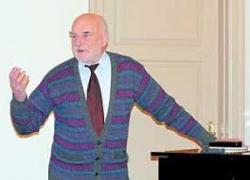
Hugh Maxwell Casson
 Great Britain
- Hugh Casson: A Visionary Architect and Designer
- Early Life and Education
- World War II and Festival of Britain
- South Bank Transformation
- Lasting Impact on British Architecture
- Knighthood and Architectural Projects
- Royal Friendship and Legacy
Hugh Casson: A Visionary Architect and Designer
Hugh Casson was a renowned British architect, interior designer, and art historian who left an enduring legacy on British postwar architecture.
Early Life and Education
Born in London, Casson pursued his education at Cambridge University, followed by the Bartlett School of Architecture in London. He was deeply influenced by the Bauhaus and modernist movements.
World War II and Festival of Britain
During World War II, Casson served in the Ministry of the Air Force's camouflage unit. His career took a pivotal turn in 1948 when he was appointed Chief Architect for the 1951 Festival of Britain, a national celebration designed to showcase the nation's recovery and unity after the ravages of war.
South Bank Transformation
As Chief Architect, Casson led the ambitious transformation of Lambeth Marsh, a neglected London suburb, into South Bank, a new architectural landscape. He assembled a team of talented young architects, including Denys Lasdun and James Stirling, to create a festival of innovative designs.
Lasting Impact on British Architecture
Despite being intended as temporary structures, many of the Festival buildings, such as the Royal Festival Hall, had a profound impact on British architecture. Casson's showcase of modernist ideas influenced subsequent architectural developments, paving the way for the Brutalist movement.
Knighthood and Architectural Projects
Following the success of the Festival, Casson was knighted in 1952. He continued to design significant buildings across England, often collaborating with his younger colleague Neville Conder. Notable works include the Royal College of Art, where Casson served as Professor of Interior Design from 1955 to 1975, and the Elephant House at London Zoo.
Royal Friendship and Legacy
Casson's close friendship with the royal family led to commissions for interior design on the royal yacht Britannia. He also provided watercolor lessons to Prince Charles. Casson's visionary designs and his ability to inspire a generation of architects continue to resonate in the architectural landscape of Britain.