Hugo Schmeisser
 Germany
- Biography of Hugo Schmeisser
- Contributions during World War I
- Post-War and Continued Innovations
- Collaboration with the Nazis
- Later Life and Legacy
Biography of Hugo Schmeisser
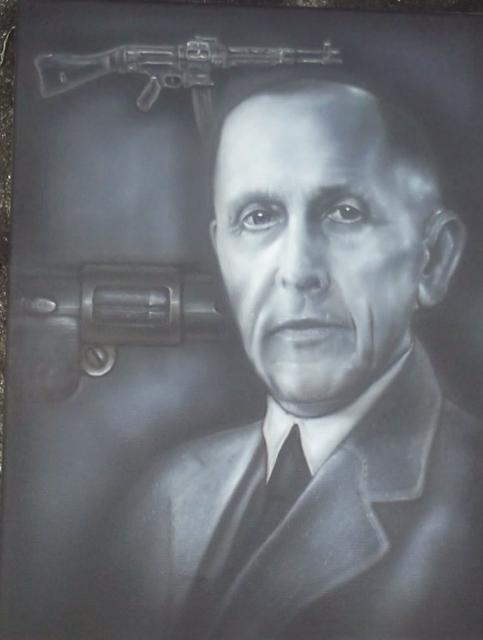
Early Life and CareerHugo Schmeisser was a German weapons designer, best known for creating the legendary German automatic carbine. He was born in Jena, Saxe-Weimar, Germany, into a family of renowned gunsmiths. Schmeisser gained his first experience with firearms while working at Theodor Bergmann's firm, where he became well-known among his colleagues for his work on automatic rifles, machine guns, and submachine guns. Under Bergmann's guidance, Schmeisser actively studied the mechanisms of 7.63mm and 9mm caliber firearms.

Contributions during World War I
During World War I, Schmeisser worked in Suhl, a major weapons manufacturing center in Prussian Saxony. His expertise in creating automatic weapons was invaluable during the war. As the war transitioned into a trench warfare phase, it became impossible for infantry to move beyond 100 meters without proper firepower. Artillery attacks caused the most damage to armies. In 1917-1918, Schmeisser developed a new automatic weapon with an effective range of 200 meters. This weapon soon became the standard armament for infantry units. It played a crucial role in the successful breakthrough of the front line during Operation Michael in March 1918. The aggressive infantry tactics developed during this period laid the foundation for the tank warfare maneuvers used in World War II.
Post-War and Continued Innovations
The Treaty of Versailles, signed on June 28, 1919, prohibited Germany from developing new types of automatic weapons. This marked the end of the thirty-year collaboration between Bergmann and the Schmeisser family. However, Hugo decided to remain in the arms industry. Together with his brother Hans, he founded the company "Industriewerk Auhammer Koch und Co" in Suhl. Despite the challenging conditions imposed by the peace agreement and the cessation of military operations, Schmeisser continued his research. In 1928, he released the MP-28 submachine gun, which became a favorite tool of the German police. He also signed contracts to supply his creations to South Africa, China, Spain, and Japan. Although Schmeisser's products were in high demand, the company often faced bankruptcy.
Collaboration with the Nazis
In 1933, the Nazis came to power in Germany and merged ten major arms companies into one. The new organization was intended to produce weapons for the military. It was during this time that Hugo Schmeisser met Ernst Udet, a German aviator and deputy to Hermann Göring. Schmeisser actively worked on various military projects, and his advice influenced the decisions of top leaders such as Göring and Adolf Hitler. Schmeisser's most famous project, the MP-43, remained a secret until 1938. This new automatic weapon was characterized by its efficient ammunition usage and high effectiveness. It became one of the world's first assault rifles. By 1943, 10,000 units of the new weapon were produced, but Hitler initially halted further production due to his strange aversion to the MP-43. However, the weapon's high effectiveness eventually convinced Hitler to reverse his decision and resume production.
Later Life and Legacy
In October 1946, Schmeisser, along with several other German specialists, was forcibly sent to the Soviet Union to work in the Ural region. However, according to official documents, his time there did not prove to be particularly beneficial. Hugo Schmeisser passed away on September 12, 1953, after undergoing lung surgery. Despite facing controversies and challenges throughout his career, his contributions to the development of firearms continue to be recognized and his designs have left a lasting impact on modern weaponry.