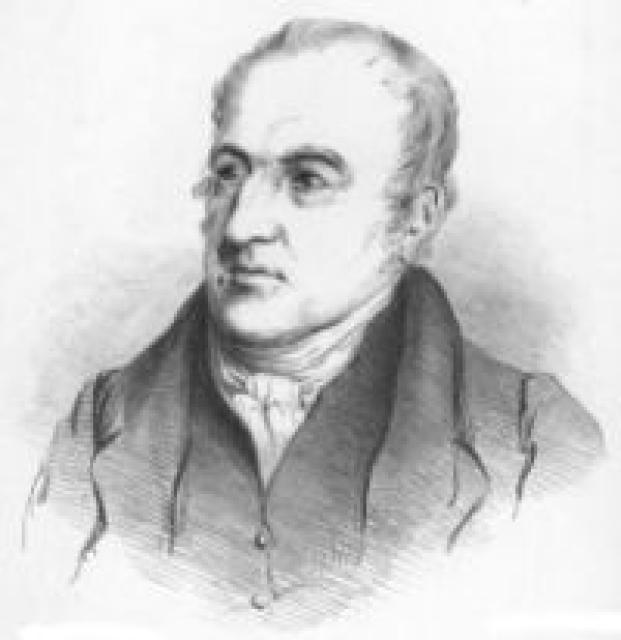
Peter Barloy
 Great Britain
Biography of Peter Barlow
Peter Barlow (October 15, 1776 – March 1, 1862) was an English specialist in fundamental and applied mathematics. He was born in Norwich, although only the month and year of his birth are known. In 1806, at the age of thirty, Barlow was appointed as a mathematics lecturer at the Royal Military Academy in Woolwich, Southeast London. He held this position for 41 years.
Contributions to Mathematics
In 1823, Barlow became a member of the Royal Society and two years later, he was awarded the Copley Medal. He dedicated much of his attention to locomotive engineering and served on railway commissions in 1836, 1839, 1842, and 1845. Barlow also conducted several investigations for the newly formed Railway Inspectorate in the early 1840s. His sons, Peter William Barlow and William Henry Barlow, went on to become prominent engineers and builders in the 19th century.
Works and Achievements
Barlow received numerous awards from British and international scientific communities. Some of his major works include "Elementary Investigations in the Theory of Numbers" (1811), "A New Mathematical and Philosophical Dictionary" (1814), and "An Essay on Magnetic Attraction" (1820). Barlow's research in magnetism led to an important practical discovery of methods to correct or compensate for errors (deviations) in ship compasses.
In addition to compiling numerous useful tables, Barlow made significant contributions to the "Encyclopaedia Metropolitana." He also authored several works on the theory of strength of materials, including "An Essay on the Strength and Stress of Timber" (1817) and "A Monograph on the Resistance of Materials." The sixth edition (1867) of the latter work was prepared by Barlow's sons after his death and includes a biography of their father.
Barlow is also known for his work in electromagnetism, particularly the invention of the Barlow's Wheel, also known as the "Barlow wheel," and the development of achromatic lenses for telescopes, known as the "Barlow lens."