Ignaz Fessler
 Hungary
- Hungary and the Catholic Church
- Criticism and Departure
- Literary and Academic Pursuits
- Novels and Prussian Sojourn
- Russian Interlude and Accusation
- Historical Works and Church Leadership
Hungary and the Catholic Church
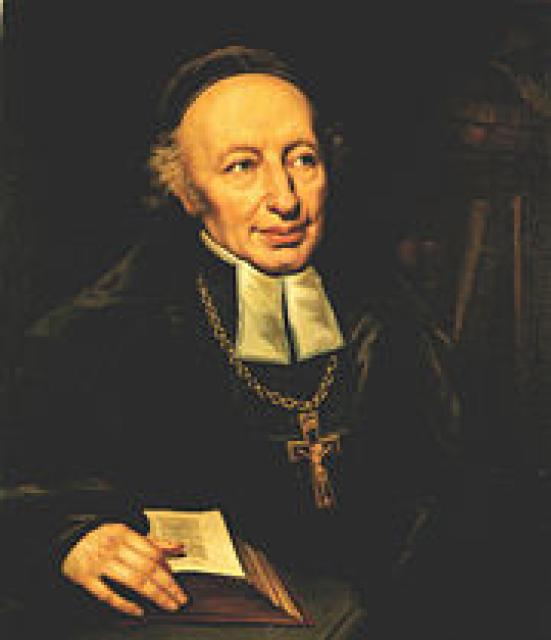
Ignác Aurélio Fessler was born in Hungary and initially pursued a religious path. In 1773, he joined the Capuchin order and was later ordained as a priest in 1779. He immersed himself in classical studies, languages, Catholic philosophy, and casuistry.
Criticism and Departure
In 1784, Fessler penned a critical letter to Emperor Joseph II regarding monastic reforms. This bold move earned him adversaries within the order, ultimately leading to his departure. He subsequently obtained a professorship in Oriental languages and Old Testament hermeneutics at the University of Lviv.
Literary and Academic Pursuits
Fessler's academic works included "Anthologia Hebraica" (1787) and "Institutiones Linguarum Orientalium" (1787). However, he also ventured into anti-Catholic literature with his tragedy "Sidney" in 1788. This drew legal scrutiny, forcing him to flee to Breslau. There, he converted to Lutheranism and married, becoming a tutor for the local prince's children.
Novels and Prussian Sojourn
Fessler's literary pursuits continued in Breslau, where he produced novels such as "Marc-Aurel" (1790-1792), "Aristides und Themistocles" (1792), "Mathjas Corvinus, Konig der Hungarn" (1793-1794), and "Attilla, Konig der Hunnen" (1794). In 1796, he relocated to Berlin, becoming a Freemason and authoring an unpublished history of the order.
Russian Interlude and Accusation
At the invitation of Mikhail Speransky, Fessler moved to Russia in 1809, occupying a professorship in Oriental languages and philosophy at the St. Petersburg Theological Academy. He also served on the Law Commission and played a significant role in Masonic discussions. However, in 1811, he was accused of atheism and removed from his academic post, subsequently being sent to Volsk.
Historical Works and Church Leadership
Undeterred, Fessler relocated to Saratov in 1813, completing his comprehensive "History of the Ugrians" (1812-1825). In 1820, he became the Evangelical Superintendent and Consistory Head in Saratov. His ecclesiastical career culminated in 1833 when he was appointed General Superintendent and Ecclesiastical Councilor of the Evangelical Lutheran community in St. Petersburg.