Yakov Agranov
 Russia
- Genesis and Early Life
- Political Activism and Revolutionary Engagements
- Inception into the Cheka and OGPU
- Mass Expulsions and Anti-Intellectual Repressions
- Supremacy in the OGPU and NKVD
- Rise to Prominence and Political Maneuvers
- Investigation of Kirov's Assassination and the Great Purge
- Fall from Grace and Execution
Genesis and Early Life
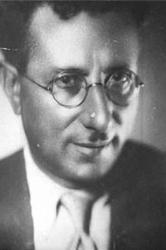
Yakov Shnaiderman was born on October 22, 1893, in the town of Chechersk, Belarus, into a Jewish grocer family. After completing four grades of the local city school, he joined the Socialist-Revolutionary (SR) party in 1912, working as a clerk while engaging in revolutionary activities.
Political Activism and Revolutionary Engagements
In 1915, Shnaiderman joined the Bolshevik party and was subsequently arrested and exiled to the Yenisei Governorate. Upon his release in February 1917, he took on the role of secretary of the Polesye Governorate Committee of the Bolsheviks. Following the October Revolution, he became secretary of the Council of People's Commissars (Sovnarkom) of the Russian Soviet Federative Socialist Republic (RSFSR).
Inception into the Cheka and OGPU
In May 1919, Shnaiderman was appointed as a special plenipotentiary to the Cheka's Special Department. By 1921, he had become the secretary of the Small Sovnarkom and the special plenipotentiary of the Secret-Operational Department of the Cheka. He played a pivotal role in investigating significant events such as the Kronstadt Rebellion, the Antonov peasant uprising, and the "Petrograd Combat Organization of V.N. Tagantsev."
Mass Expulsions and Anti-Intellectual Repressions
On the orders of Vladimir Lenin and Felix Dzerzhinsky, Shnaiderman compiled lists of individuals to be deported from the RSFSR, including prominent intellectuals such as Nikolai Berdyaev and Nikolai Lossky. From 1922 onward, he served as the chief of the Special Bureau of the OGPU for the administrative deportation of "anti-Soviet elements."
Supremacy in the OGPU and NKVD
In 1923, Shnaiderman was promoted to deputy chief of the Secret Department of the OGPU and then became its chief in 1929. During the famine of 1932-1933, he orchestrated widespread repressions. Known for his association with the creative intelligentsia, he counted among his friends celebrated writers, poets, and artists.
Rise to Prominence and Political Maneuvers
Appointed as deputy chairman of the OGPU (headed by Genrikh Yagoda) in 1933, Shnaiderman subsequently became first deputy commissar of internal affairs in 1934. As Commissar of State Security, he supervised the operations of all departments within the Main Directorate of State Security (GUGB) of the USSR.
Investigation of Kirov's Assassination and the Great Purge
In 1935, Shnaiderman led the investigation into the assassination of Sergei Kirov. Notably, he obstructed the uncovering of the true circumstances surrounding the murder, eliminated those involved, and engineered repressions affecting over 11,000 individuals. In preparation for the Great Purge, he orchestrated high-profile trials, resulting in the executions of Kamenev, Zinoviev, Ryutin, and others associated with Trotskyism and the opposition.
Fall from Grace and Execution
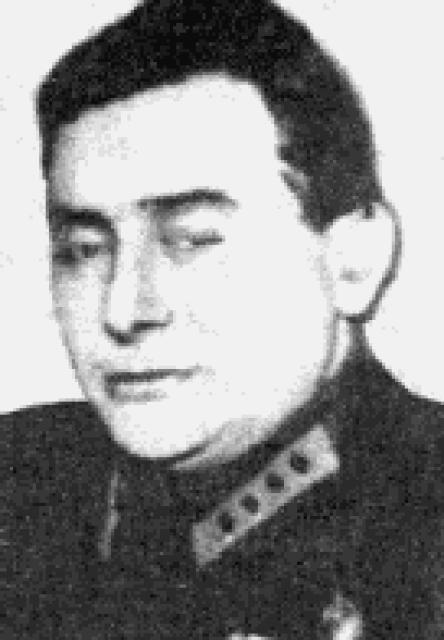
Shnaiderman's tenure as head of the GUGB proved short-lived, as he was removed from his post in May 1937 and demoted to head the NKVD administration in Saratov. In July 1937, he was expelled from the party and arrested on charges of violating socialist legality. Subjected to intense interrogation, he confessed to his involvement in an "anti-Soviet Trotskyist organization." As an "enemy of the people," Yakov Shnaiderman was executed by firing squad on August 1, 1938.