Osama bin Laden
 Afghanistan
- The Godfather of Terror: Osama bin Laden
- A Reluctant Terrorist
- The Face of Evil
- Personal Life
- Wealth and Power
- Rise in Afghanistan
- The Mentor
- Return to Saudi Arabia
- Exile in Sudan
- Global Ambitions
The Godfather of Terror: Osama bin Laden
Explosive BeginningsOn September 8, 1999, a devastating explosion shook Moscow, killing 96 and injuring 300. A second blast on September 13 claimed 130 lives. Experts concluded that the attacks were perpetrated by a single individual, known as "Mujahideen," "Abu-Abdullah," "Hajj," and "Director" to his associates.
The world came to dread the name behind these aliases: Osama bin Laden. He proclaimed, "We make no distinction between those wearing military uniforms and those wearing civilian clothes. They are all legitimate targets to us."
Bin Laden became a prime suspect in a string of terrorist attacks, including the World Trade Center bombings in New York City, the attacks on U.S. servicemen in Saudi Arabia, the bombing of the Egyptian embassy in Islamabad, and the assassination attempt against Egyptian President Hosni Mubarak.
A Reluctant Terrorist
Despite his reputation, bin Laden himself was not a violent man by nature. His mission was to wage war against "kafirs" (infidels), to establish a "global Islamic revolution," and to fund international terrorism. He established training camps, acquired weapons, and paid his fighters generous salaries.
The Face of Evil
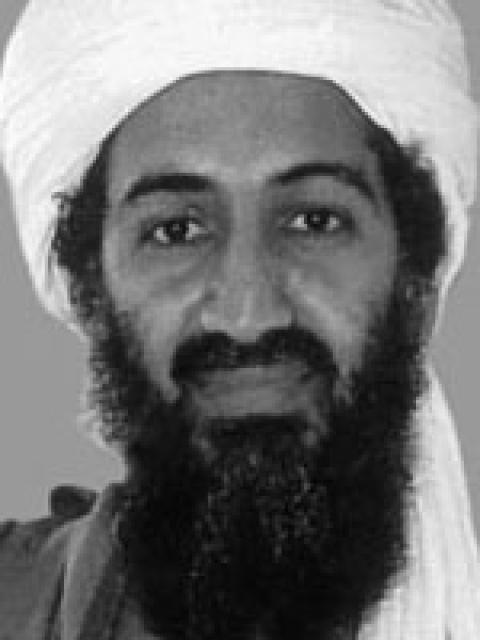
Bin Laden's image became synonymous with evil. His portraits adorned the covers of newspapers with captions such as "Enemy Number One" or "Enemy of the Free World." His photographs hung on walls in Sudan, Pakistan, and Albania, where he enjoyed widespread popularity.
Personal Life
Despite his public image, bin Laden lived a life of mystery. He was known for his gracious hospitality, offering visitors tea and traditional Arabian treats. He dressed modestly in a flowing robe, with a "kufiya" or Afghan cap on his head.
As a devout Muslim, bin Laden had four wives and a small harem. He was also an avid fan of sports, particularly camel racing and falconry.
Wealth and Power
Bin Laden's family, the wealthy Yemeni clan of the bin Ladens, had made their fortune in Saudi Arabia's construction industry. Their patronage had earned them close ties to the royal court.
Osama inherited a significant share of his family's wealth, estimated at around $300 million. He also owned businesses in Sudan, Yemen, and elsewhere.
Rise in Afghanistan
In 1980, bin Laden joined the Afghan resistance to the Soviet occupation. His military units gained notoriety for their brutality and alleged involvement in drug trafficking. He also acted as a mediator between the Afghan government and rebel groups.
The Mentor
Bin Laden's mentor was Abdullah Azzam, a renowned Islamic scholar. After Azzam's assassination in 1989, bin Laden became the leader of the "Afghan Arabs," a group of Muslim extremists responsible for numerous terrorist attacks worldwide.
Return to Saudi Arabia
Following the Soviet withdrawal from Afghanistan, bin Laden returned to Saudi Arabia and resumed his business activities. However, his outspoken criticism of the royal family's alleged corruption and Western influence led to his exile.
Exile in Sudan
In 1992, bin Laden fled to Sudan, where he established a network of businesses and training camps. He received support from the National Islamic Front, a powerful Islamist movement.
Global Ambitions
Bin Laden envisioned a global Islamic empire, spanning 50 countries. He invested heavily in building his organization and sending operatives to Europe and the United States.
His plans remained largely unrealized, as he was killed in a U.S. raid in Pakistan in 2011. However, his ideology and legacy continue to inspire terrorist groups worldwide.