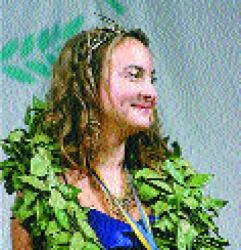
Ilya Gurevich
 USA
Ilya Gurevich was a teenage chess prodigy who won one of the game’s most prestigious junior titles before turning his attention to life beyond the tournament circuit. His rise carried him from Soviet Ukraine to the United States, from street chess in New York to the summit of the World Junior Championship, and eventually from grandmaster competition to a career in finance.
From Kyiv to Worcester
Gurevich was born in Kyiv on February 8, 1972. His family emigrated to the United States when he was a child, settling in Worcester, Massachusetts. He showed exceptional ability early: as a youngster he won national scholastic events and quickly moved into the ranks of the country’s strongest junior players. At 12, he was already competing successfully against adult masters in New England tournaments.
He attended Yeshiva Academy in Worcester and later enrolled at New York University. In 1990, a Washington Post profile described the 18-year-old as a newly crowned world junior champion who had moved to New York because the chess opportunities there were too compelling to pass up. He could be found playing fast games in Washington Square Park, where the short clock demanded sharp instincts and quick calculation. His style was described as intuitive, a quality that made him compelling both in formal competition and in the public spectacle of park chess.
World Junior Champion
Gurevich’s breakthrough came at the 1990 World Junior Chess Championship in Santiago, Chile. He tied for first with Alexei Shirov, finishing the 13-round event undefeated, and took the title on tiebreak points. The victory was a landmark for American chess: he became only the fourth American to win the World Junior Championship. It also confirmed that the young player from Worcester could hold his own against the strongest chess talents of his generation.
He continued to represent the United States in international competition. In 1991, Gurevich played on the American team that won silver at the World Under-26 Team Chess Championship in Brazil. FIDE awarded him the International Master title in 1990 and the Grandmaster title in 1993, formal recognition of a progression that had begun with scholastic chess and accelerated through elite junior events.
During the 1990s he took part in strong open tournaments and in the Harvard Cup, a high-profile series of matches between human grandmasters and chess computers. His classical rating reached a peak of 2586 in July 1999, placing him among the leading American players of the period. Yet chess was not the only future he was building. He studied finance and began working in the world of options trading.
A Career Beyond the Board
By the end of the 1990s, Gurevich had scaled back his professional chess schedule to focus on finance. The change was striking for a player who had been celebrated as a teenage champion, but it did not erase his competitive record. His world junior title and team silver remained the signature achievements of a concise but high-level career, and his peak rating reflected years spent facing formidable international opposition.
Gurevich has not disappeared from chess entirely. He has continued to appear in selected events, including team rapid and blitz competition in 2025. His career therefore has a second act of sorts: after devoting years to finance, he returned to the board in a more selective way, carrying the experience of a former world junior champion into modern team play.
Legacy
Gurevich’s story stands out for the speed of his ascent and the deliberate choice to pursue a different profession while still at the height of his chess strength. He moved from childhood competition to a world title at 18, earned the grandmaster title, and reached a rating near the world elite. Then he shifted his focus to finance without severing his connection to the game. For American chess, he remains one of the country’s notable junior champions and a reminder that even an extraordinary chess career can take an unexpected turn.