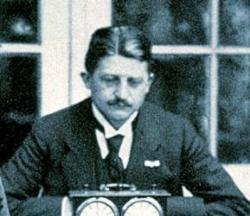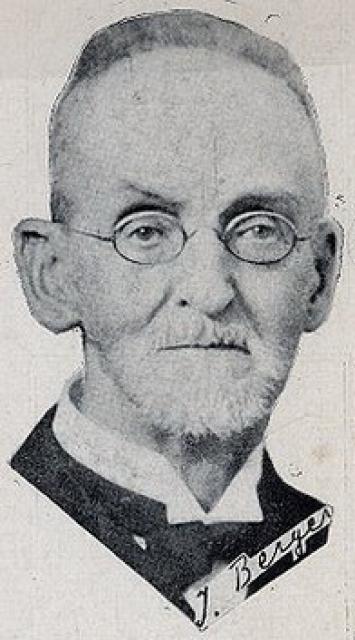
Johann Nepomuk Berger
 Austria
- Johann Nepomuk Berger (1845-1933)
- International Triumphs
- 4th place in Nuremberg (1883)
- Theoretical Contributions
- 1. Qb4! - Zugzwang (Mandatory Move)
Johann Nepomuk Berger (1845-1933)
Early Life and Chess BeginningsJohann Nepomuk Berger was born in Graz, Austria, in 1845. His passion for chess emerged at a young age, and he quickly established himself as a formidable player in the local chess circles.
International Triumphs
In 1870, Berger won the international tournament in Graz, marking his first major triumph. He continued to excel in international competitions throughout his career, securing notable results at prestigious events such as:
4th place in Nuremberg (1883)
5th-6th place in Frankfurt-on-the-Main (1887)6th place in Barmen (1905), where he defeated renowned masters such as David Janowski, Frank Marshall, Carl Schlechter, and Mikhail Chigorin
Theoretical Contributions
Beyond his competitive achievements, Berger was also a renowned chess theorist. He published numerous articles and books, contributing to the development of chess strategy and analysis. His most famous contribution is known as the Berger Check:
1. Qb4! - Zugzwang (Mandatory Move)
1. ... Kd5 2. Ne3+ Kd6 3. Qb8+1. ... e4 2. Ne6+ Kd5 3. Qc5+
1. ... f4 2. Nb6+ Ke3 3. Qb2
Later Years and Legacy
In his later years, Berger settled in Vienna, where he continued to play and write about chess. His contributions to the game left an enduring mark on the world of chess. He passed away in Vienna on October 10, 1933, at the age of 88.
Johann Nepomuk Berger is remembered as one of the leading chess masters of his era, a gifted theorist, and a tireless advocate for the game. His legacy continues to inspire future generations of chess players.