Hong Zicheng
 China
ChinaBiography of Hun Zicheng
Early LifeHun Zicheng was a Chinese writer, poet, and philosopher during the 17th century. He lived towards the end of the Ming dynasty. Recent research suggests that he may have been born in Xindu District, Chengdu, Sichuan Province.
Works
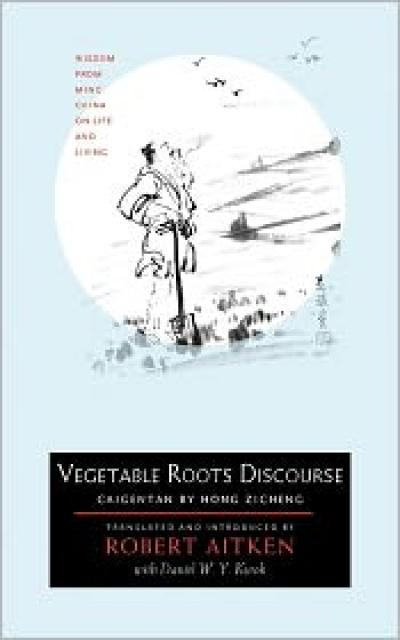
Hun Zicheng wrote several notable works, including "The Taste of Roots" (Caigentan) around 1590. This work is a collection of eclectic aphorisms that combine elements of Confucianism, Taoism, and Zen Buddhism. The blend of these three teachings reflects the author's tolerance. Another of his works, "The Wonderful Traces of Transcendents and Buddhas" (Xianfo qizong), published in 1602, contains legends about Daoist and Buddhist masters. He also wrote several smaller works that have survived to the present day. In his writings, Hun Zicheng explored the lives of Daoists, mystical and semi-legendary philosophers, Indian Buddhist patriarchs, and delved into topics such as immortality, its attainment, and the mysteries of eternity.
Mysterious Figure
Overall, Hun Zicheng remains a historically enigmatic figure. The "Goodrich and Fang" dictionary states, "Nothing is known about his life and career." It is only known that he was a contemporary of Yu Kongqian, and both thrived during the reign of the Chinese Emperor Wanli (1572-1620). The preface by Yu Kongqian to Hun Zicheng's book "Caigentan" provides a little insight into his early life.
Personal Challenges
According to Yu Kongqian, Hun Zicheng "appeared one day with his book 'The Taste of Roots' and asked me to write a preface for it... The fact that he used the words 'The Taste of Roots' to title his work directly refers to his purifying experience of poverty and compares the cultivation of human morality to the growth of a plant." Yu Kongqian also states that Hun Zicheng "endured persecutions from the storms of life and experienced several difficult situations." Master Hun said (as paraphrased by Yu Kongqian), "If Heaven makes me suffer physically, I will tune my mind to peace and thus replenish my physical weakness. If Heaven tries to push me into misfortune, I will remain true to my principles and overcome the failures on this path." From this, Yu Kongqian concludes that Hun Zicheng constantly admonished and motivated himself.
Names
Hun Zicheng's original name was Hong Yingming/Ying-ming, and his alternative pen name (hao) was Huanchu Daoren/Huan-ch'u Tao-jen, which means "an adept of Daoist teachings returning to his roots." It is thanks to "The Taste of Roots" that Hun Zicheng popularized the aphorism genre, which became a favorite genre in Chinese literature.