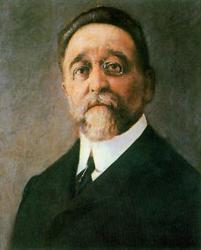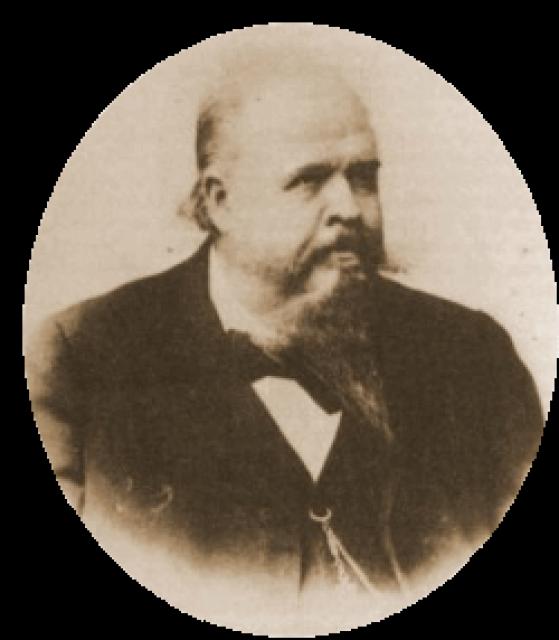
Manuel Fernandez Caballero
 Spain
Spain- Biography of Manuel Fernández Caballero
- Early Life and Musical Education
- Early Career and Success
- Later Career and Recognition
- Later Years and Legacy
Biography of Manuel Fernández Caballero
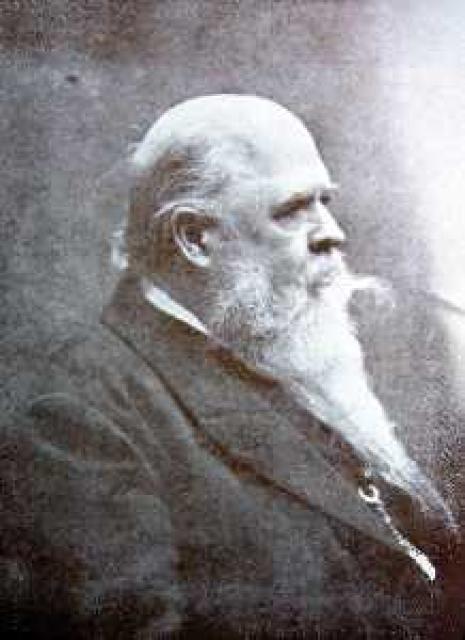
Manuel Fernández Caballero was a renowned Spanish composer known for his zarzuelas, a musical-dramatic genre similar to operetta that combined vocal performances, dances, and dialogues. He was born on March 14, 1835, in Murcia, a city in the southeastern region of Spain.
Early Life and Musical Education
Caballero's father passed away before his birth, and at a young age, he began learning music with his relative Julián Gil, the director of the local theater orchestra, and José Calvo, who taught him basic skills in playing a wide range of instruments. He also sang in the choir of the local Augustinian monastery. At the age of 10, his family sent him to Madrid to continue his studies with another relative, Rafael Palazón. In 1850, Manuel decided to settle in the capital by enrolling in the conservatory, where he studied various disciplines, including harmony, composition, counterpoint, and fugue. In 1856, he won the first prize for composition.
Early Career and Success
In 1853, Caballero served as the first violinist at the Royal Theater and conducted the orchestra at Teatro Variedades, where he also wrote several orchestral overtures and music for ballet. The following year, he moved to Teatro Lope de Vega, where he composed his first zarzuela, "Tres madres para una hija." Despite the great success of zarzuelas such as "La jardinera" in 1857, his works did not bring him financial prosperity. After writing around 30 zarzuelas in seven years, he became disillusioned with this life and left for Cuba, where he founded his own company and lived until 1871.
Later Career and Recognition
When Caballero returned to Madrid, the situation changed, and he soon gained nationwide fame as the author of highly successful productions, starting with "Día feliz" in 1872. Among his most famous works written over the next 35 years are "La Marsellesa" (1876), "Los sobrinos del capitán Grant" (1877), based on Jules Verne's novel, "Chateau-Margaux" (1887), "El dúo de La Africana" (1893), "El cabo primero" (1895), and "La viejecita" (1897). From 1882, he became the permanent conductor of the Artístico-Musical Orchestra, while his zarzuelas continued to be successfully performed throughout the Spanish-speaking world, including theaters in Buenos Aires and Montevideo.
Later Years and Legacy
Caballero received numerous awards both in his homeland and abroad. In 1894, the composer began to lose his sight, which limited his activities. However, a cataract removal surgery in 1902 restored enough of his vision for him to deliver a welcoming speech at the Academy, with the theme being a popular Spanish song. One of his late works that still remains popular is the zarzuela "Gigantes y Cabezudos," a patriotic composition written after the Spanish defeat in Cuba.
Manuel Fernández Caballero passed away on February 26, 1906, in Madrid. He was a talented and versatile musician, and his works were impeccable in terms of technique and musical interest. He is considered one of the greatest composers in the zarzuela genre.