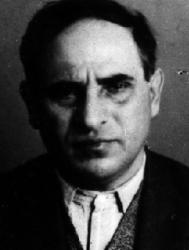
Inder Kumar Gujral
 India
India- Inder Kumar Gujral
- Political Career in Public Service
- Affiliation with Janata Dal and Ministerial Roles
- Prime Minister of India
- The Unraveling Compromise
- Honors and Recognition
Inder Kumar Gujral
Early Life and Political ActivismInder Kumar Gujral, an Indian statesman, was born on December 4, 1919, in Jhelum, British India. Hailing from the Khatri clan, he inherited a deep-rooted passion for fighting against British colonialism from his parents. Gujral's political journey commenced at an early age when, at just 11 years old, he was arrested and subjected to police brutality for organizing an anti-government movement in his hometown.
Political Career in Public Service
Gujral's political involvement extended through various positions, including Vice-President of the New Delhi Municipal Committee (1956-1964) and Member of the Rajya Sabha (1964-1976). He held the portfolio of Minister of Information and Broadcasting in Indira Gandhi's government (1975-1976) and served as India's Ambassador to the Soviet Union (1976-1980).
Affiliation with Janata Dal and Ministerial Roles
Gujral later resigned from the Indian National Congress and joined the Janata Dal party. He held the position of India's External Affairs Minister in the cabinets of Vishwanath Pratap Singh (1989-1990) and H. D. Deve Gowda (1996-1997). Prior to his ascendancy as Prime Minister, Gujral assumed various ministerial responsibilities.
Prime Minister of India
Formation of the Gujral GovernmentThe Gujral government emerged as a result of a parliamentary compromise between the Congress and the United Front, who were reluctant to hold snap general elections following the resignation of Deve Gowda's government.
The Unraveling Compromise
The compromise proved short-lived. After revelations of a South Indian party's (DMK) alleged links to the Liberation Tigers of Tamil Eelam, responsible for Rajiv Gandhi's assassination, the Congress demanded the resignation of DMK ministers. This demand was not met, and Congress withdrew its support for the Gujral government on November 28, 1997, leading to its resignation. Fresh general elections were subsequently scheduled for February-March 1998.
Honors and Recognition
Gujral received numerous accolades, including:- Order of Friendship (Russia, 2000)
- International Dialogue of Civilizations Prize (2002)