Ingólfr Arnarson
Ingólfr Arnarson is remembered in Icelandic tradition as the first permanent Norse settler in Iceland and the founder of Reykjavík. Medieval accounts place his arrival in the late ninth century, when Scandinavian settlers began establishing farms across the island. The stories about him were written down centuries later, so his exact life is difficult to separate from legend.
A settler from Norway
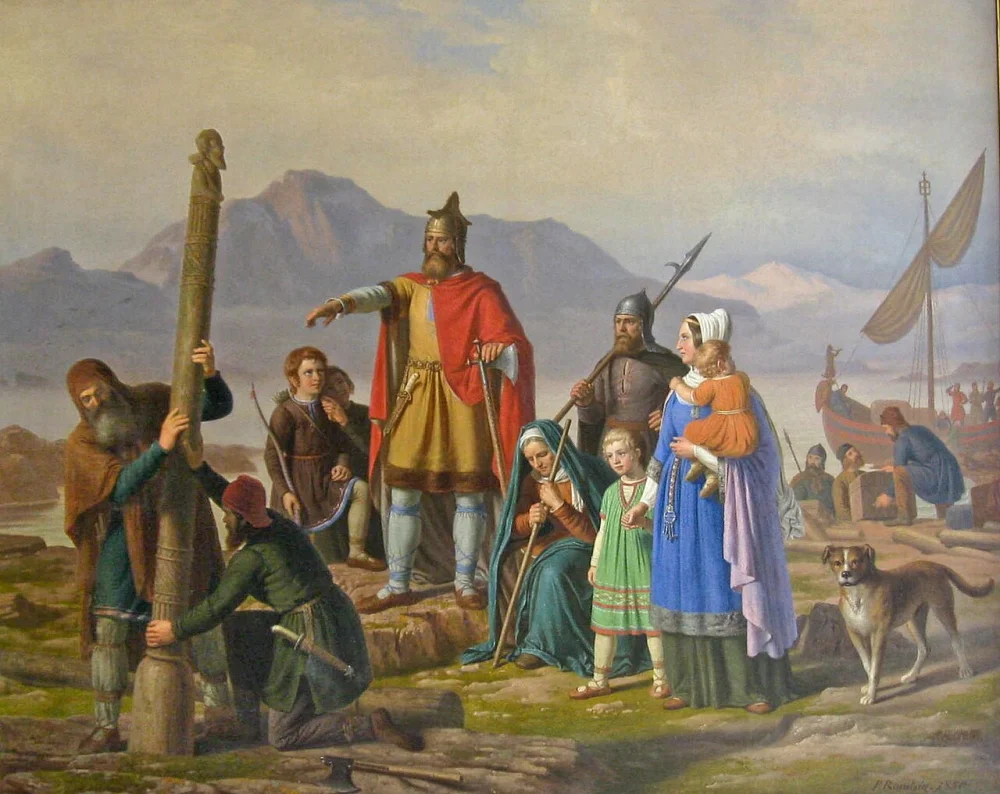
According to Íslendingabók and Landnámabók, Ingólfr left Norway after a dispute or blood feud and sailed west with his household. The traditional settlement date is 874. He traveled with his foster-brother Hjörleifr Hróðmarsson and settled with his wife Hallveig Fróðadóttir and their followers.
The sagas tell that when Ingólfr first sighted Iceland, he cast his high-seat pillars into the sea and vowed to settle wherever they came ashore. After finding them in a bay on the southwestern coast, he built his farm there. The steam rising from nearby hot springs inspired the name Reykjavík, meaning “Smoky Bay.”
Stories of the settlement
The medieval accounts describe Ingólfr as the leader of a household settlement that grew into a network of farms. They also tell of Hjörleifr’s death at the hands of enslaved men who rebelled against him, and of Ingólfr’s pursuit of them. These episodes are part of Iceland’s foundational settlement narrative, though they cannot all be independently verified.
Ingólfr is called the first settler in the written tradition, but this does not mean Iceland had never been visited or inhabited before the Norse settlement. Íslendingabók mentions Irish Christian hermits, known as papar, who supposedly left when Norse settlers arrived. The archaeology confirms human settlement in Reykjavík around the late ninth century, but it cannot establish every detail of the literary accounts.
Legacy
Ingólfr’s place in Icelandic memory rests on the founding story attached to Reykjavík and the beginning of the settlement period. The city’s central role in modern Iceland has made him a lasting symbol of the island’s Norse origins, while the gap between archaeology and saga tradition keeps his biography partly in the realm of legend.