Daniel Boone
- From Pennsylvania to the backcountry
- The Wilderness Road and Boonesborough
- Capture and frontier warfare
- Later life and the making of a legend
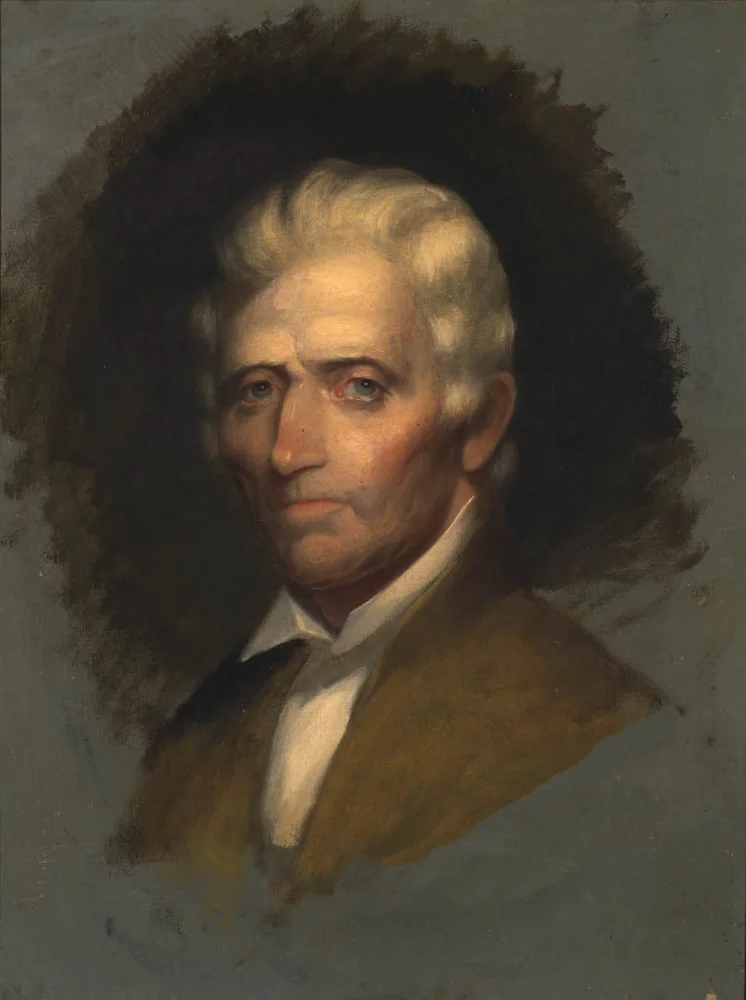
Daniel Boone became one of the best-known figures of the American frontier, but his life was more complicated than the buckskin-clad folk hero created by later writers. A skilled hunter, surveyor, militia officer, and land speculator, he helped open routes that brought thousands of settlers into Kentucky. That westward movement took place across lands claimed and inhabited by Indigenous peoples, including Shawnee and Cherokee communities, and brought conflict and displacement as well as new settlements.
From Pennsylvania to the backcountry
Boone was born on 2 November 1734 near Reading, Pennsylvania, the son of Squire and Sarah Boone. His parents were Quakers. Around 1750, the family moved to the Yadkin River region of North Carolina, then a frontier settlement. Boone developed the skills of a hunter and woodsman while exploring the Blue Ridge and backcountry.
In 1755, he served as a teamster on General Edward Braddock’s expedition to Fort Duquesne during the French and Indian War. The following year, he married Rebecca Bryan. They raised a large family, eventually having ten children. Boone spent much of the 1760s hunting and trapping in the western reaches of Virginia and what would become Kentucky.
The Wilderness Road and Boonesborough
Boone first traveled into Kentucky in 1769 with a small group of companions. The region was not an empty wilderness: Native nations had longstanding ties to the land, and British colonial claims were contested. In 1775, land speculator Richard Henderson hired Boone to blaze a route through the Cumberland Gap to the Kentucky River. Known as the Wilderness Road, it helped settlers reach a new outpost, Boonesborough, where Boone and his family settled.
The route became central to the settlement of Kentucky, but also accelerated the encroachment of colonists into Indigenous territory. During the Revolutionary era, Boone served in local militia and defended the settlements against attacks. The conflict was part of a wider struggle involving British forces, American settlers, and Native communities seeking to protect their lands.
Capture and frontier warfare
In 1778, while leading a party to the Licking River salt springs, Boone was captured by Shawnee warriors and taken to their leader, Blackfish. Boone learned of a plan to attack the Kentucky settlements and negotiated to delay it. Blackfish adopted Boone and gave him the name Sheltowee, meaning “Big Turtle,” according to later accounts. Boone eventually escaped and returned to Boonesborough, where he helped organize its defense.
His conduct during captivity and the negotiations raised suspicion among some settlers, and he faced a court-martial. He was acquitted. Boone later served in Virginia’s legislature and continued to work as a surveyor, trader, and land speculator. Many of his land claims failed because of legal disputes and problems with documentation, and debt followed him for years.
Later life and the making of a legend
In 1799, Boone moved with his family to Spanish Louisiana, settling near the Missouri River after receiving a land grant. He lived there for the final two decades of his life and died on 26 September 1820 at the home of his son Nathan.
Boone’s fame had begun to spread during his lifetime. In 1784, writer John Filson published a romanticized account of his adventures, helping turn him into an international celebrity. Later books and popular culture amplified the image of the solitary hero and often embellished his exploits.
Boone’s legacy remains tied to both his real abilities and the expansion he helped enable. His endurance, skill, and leadership made him a central figure in early Kentucky history, while his story also reflects the costs of settler expansion for Native nations whose lands were taken and communities disrupted.