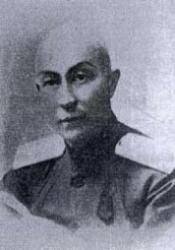
Ioannis Metaskas
 Greece
- Biography of Ioannis Metaxas
- Early Military Career
- Political Involvement
- Appointment as Prime Minister
- Foreign Policy
- World War II
- Legacy
Biography of Ioannis Metaxas
Ioannis Metaxas (Greek: Ιωάννης Μεταξάς) was a Greek general and politician who served as the Prime Minister of Greece from 1936 until his death. Born on April 12, 1871, he played a significant role in Greek military and political history.
Early Military Career
Metaxas received military education and began his career by participating in the Greek-Turkish war in 1897. He continued his training in Germany and returned to Greece to contribute to the modernization of the Greek army before the Balkan Wars (1912-1913), in which he actively participated. In 1913, he was appointed Chief of the General Staff.
Political Involvement
Metaxas was a monarchist and had tense relations with the prominent Greek republican Eleftherios Venizelos. After Venizelos came to power in 1917 with the support of the Allies, Metaxas and the king went into exile.
Appointment as Prime Minister
In 1935, following a referendum that restored the monarchy, the Communist Party gained significant support in the elections. Fearing the rise of the left, the king appointed Metaxas as the temporary Prime Minister "until the political crisis was resolved." In 1936, he dissolved the parliament and implemented populist policies, such as introducing an 8-hour workday and increasing agricultural prices. Despite these measures, the support for left-wing parties continued to grow.
Foreign Policy
In terms of foreign policy, Metaxas sympathized with Germany and Italy, as his regime was greatly influenced by Italian fascism. However, he also recognized that Germany and Italy were natural enemies of Greece, leading him to pursue a consistent pro-British policy. Under his leadership, Greece constructed the Metaxas Line, a defensive wall along the border.
World War II
Although he attempted to maintain neutrality, Metaxas was forced to enter World War II after Mussolini's ultimatum in October 1940. Greece successfully repelled the Italian invasion and partially occupied Albania, prompting Mussolini to seek assistance from Hitler.
Legacy
Metaxas passed away from phlegmonous angina in 1941, and he was succeeded by Alexandros Korizis. In modern Greece, opinions about Metaxas are mixed. Some consider him as a predecessor to the military junta known as the "Black Colonels," while others admire his patriotism, social policies, and military victories against the Italian invaders.