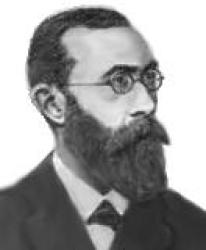
Iohann Herbart
 Germany
Biography of Johann Herbart
Johann Herbart was a German philosopher, psychologist, and educator, known as the founder of empirical psychology in Germany. He was born on May 4, 1776, in Oldenburg, Germany.
Introduction to Empirical Psychology
Herbart considered representations as the elements of consciousness. He believed in the necessity of applying mathematics to explain their stability and dynamics, particularly their strength and clarity. According to Herbart, there are three areas of consciousness: clear consciousness, "simple" consciousness, and the unconscious, with transitions ("thresholds") between them.
Transitions in Consciousness
Herbart proposed that representations can transition from the unconscious to consciousness through the strength of the representation itself and its connections to past experiences. This process is known as "emergence." Additionally, representations can also transition from consciousness to the unconscious through a phenomenon called "repression."
Overall, Johann Herbart's contributions to empirical psychology laid the foundation for understanding the dynamics of consciousness. His emphasis on the mathematical aspects of psychology provided a unique perspective on the study of the mind.