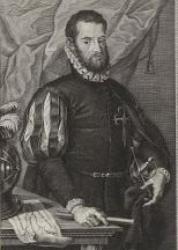
Iones Ingram
 USA
USABiography of Ioness Ingram
Ioness Ingram was an American submarine admiral born in the state of Indiana in 1886. Graduates of the Naval Academy in 1907 knew their former classmate Ingram not only as a promising officer, but also as an excellent football player: for several years, Ioness coached sports teams at the academy. In the beginning of 1945, the last year of the war, Americans were concerned about rumors that German submarines were planning to shell the eastern coast of the United States with new rocket projectiles. On January 8, Admiral Ioness Ingram held a press conference where he openly stated the likelihood of such a threat from the German U-boat group "Seewolf". However, Ingram was mistaken: although "Seewolf" was a fairly powerful force, the only novelty that German submarines could boast of was the snorkel*. The presumed plan of Denitz to shell American cities worried Ingram much more than any other US naval officer. The American admiral already had experience in creating oceanic anti-submarine barriers in the South Atlantic and was now willing to use it to protect the eastern coast of the United States and Canada. For this, Ioness Ingram had sufficient forces. Under his command was a large fleet consisting of two aircraft carrier groups. However, exaggerating the danger of the "Seewolf" submarines, the higher American command sent not one, but several task forces against them. The time for decisive action for Ingram's ships came in mid-April 1945, when the "Seewolf" group had already been weakened by the loss of three of its submarines. Despite this, Denitz ordered the remaining submarines of "Seewolf" to scatter and make their own way to the American coast. This made Ingram's task of finding and destroying the surviving submarines individually even more difficult. In order to carry out the command's orders, Admiral Ingram deployed a large part of his ships into a huge defensive line about 120 miles long. The flanks of the line were occupied by the aircraft carriers "Bogue" and "Kor". On April 21, this powerful anti-submarine barrier moved eastward, carefully combing the coastal waters. As a result of this operation, which was named "Teardrop", the "Seewolf" submarine group was defeated. American ships destroyed five out of six German submarines that they discovered.
Ioness Ingram was born in the state of Indiana in 1886. Graduates of the Naval Academy in 1907 knew their former classmate Ingram not only as a promising officer, but also as an excellent football player: for several years, Ioness coached sports teams at the academy. Ingram's military career cannot be called rapid. In the First World War, the future admiral served on the ship "New York". He received his own ship, an escort destroyer, when he turned thirty-eight. Two years later, in 1930, Ioness was assigned as the assistant commander on the battleship "Pennsylvania". Finally, in 1936, fortune smiled on Ingram, who was put in charge of the 6th division of destroyer escorts. Four years later, he reached the peak that every combat naval officer secretly dreams of and took command of the American battleship "Tennessee". The new war brought Ingram to the shores of Brazil. On January 10, 1942, he was appointed commander of the 2nd cruiser squadron with the rank of rear admiral...
From the very beginning of the fighting in the Atlantic, there were pro-American sentiments among the personnel of the Brazilian Navy. The lack of funds restrained the growth of the Brazilian fleet. Therefore, Brazil, which had almost no railways and relied on coastal navigation, was particularly vulnerable to potential enemies, the Japanese and German navies. Meanwhile, the entry of this country into the war on August 22, 1942, was regarded by American diplomats as an event of paramount importance. Having Brazil as an ally and with the support of Uruguay, the United States hoped to attract French North Africa to their side in order to begin patrolling the vast expanse of the waters from the mouth of the La Plata River in America to Cape Igolny on the African continent. It was planned that the South Atlantic Task Force under the command of Ioness Ingram, whose ships had long been engaged in combat operations in the southern part of the ocean, would be responsible for this patrol. On April 24, 1941, this task force, consisting of four old light cruisers and five destroyers, left Newport for the area of the ocean triangle of Trinidad Island - Cape San Roque - Cape Verde Islands. In four months of patrolling, Ingram's ships covered a distance of 81,000 miles, only occasionally stopping in Recife to replenish fuel and supplies. In order to secure the convoy escorts, in December 1941, the Americans began to deploy naval aviation bases in South America. The network of airfields continued to expand, and soon the command of the US Navy became interested in the lonely island of Ascension, which belonged to Britain. The British had never thought of using Ascension Island as an air base. However, during the war, the island, which was constantly buzzing with the sound of planes flying from the US to South Africa and back, became of unquestionable strategic interest. On March 30, 1942, two transports with an engineering and construction battalion on board approached Ascension Island. Two cruisers ("Memphis" and "Cincinnati") and five destroyers from Ingram's squadron escorted them through the dangerous waters of the South Atlantic. The new airfield on Ascension Island, which was put into operation by July 1942, was destined to play a significant role in the anti-submarine warfare of the United States.
By this time, German and Italian submarines had begun to show increased activity off the coast of Brazil. On May 18, 1942, the large Brazilian steamship "Commandante Lyra" was torpedoed. At Ingram's order, a rescue party from the light cruiser "Omaha" towed the ship to Fortaleza. The Germans' actions against the shipping of a neutral country gradually became more decisive. In just three days in August 1942, German submarines sank five ships of the Brazilian merchant fleet with a total tonnage of about 15,000 tons. The patience of the Brazilian government was exhausted, and Brazil declared war on Germany and Italy. Upon entering the war, the official Rio de Janeiro immediately imposed an embargo on Brazilian ports and ordered the entire merchant fleet to return to the coast. Vice Admiral Ingram, deeply concerned, flew to the capital of Brazil on the next flight. He had to convince President Vargas of the need to resume shipping at all costs. Ingram's reasonable arguments influenced the Brazilian president, who quickly realized that the embargo would not only be a serious hindrance to the United States, but also lead to the collapse of Brazil's economy. And when Ingram announced that he was ready to take on the protection of Brazilian convoys, Vargas no longer hesitated - there could be no question of an embargo!
Ioness Ingram never threw words to the wind. After the conversation with Vargas, he succeeded in persuading the US Navy command to transfer several anti-submarine hunters and "Flower" corvettes to the Brazilian fleet. Thanks to Ingram's efforts, by the end of 1943, Brazil received sixteen maritime hunters of the "PC" and "SC" types. It is not surprising that the commander of the Brazilian Navy, D. Martins, decided to give a group of patrol forces in the northwest to Rear Admiral A. Suarez Dutra under the operational control of Ioness Ingram. The Brazilian commander believed that no one could better establish cooperation between the allied fleets than Ingram, who was promoted to full admiral in September 1942. Indeed, the naval forces of the allies managed to block the narrow part of the Atlantic between Brazil and Africa. After September 1, 1942, only two out of 18 armed transports from Japan to Germany managed to break through this barrier. However, the main goal - to stop the German submarines' depredations in the South Atlantic with the surface fleet - was not achieved. This prompted Ingram to focus on organizing a clear convoy system. To escort the convoys, Admiral Ingram established a new naval base in Rio de Janeiro, which he himself headed. Now, all convoys heading to and departing from Trinidad began and ended their transit in the Brazilian capital. Since the military fleet was based here, it was easy to allocate powerful protection to each convoy.
The failures of the patrol ships were compensated by the successes of the patrol aviation (which also came under the command of Admiral Ingram, who in 1943 took over the US 4th Fleet in Brazil).
On the eve of the great Brazilian blitz by Grand Admiral Denitz, Ingram decided to test the joint actions of surface ships and aviation - and it turned out to be successful. In mid-May, US Navy search planes discovered the German U-boat "U-128" in the Bahia area. At Ingram's order, the destroyer escorts "Moffett" and "Juett" detached from the nearby convoy and headed towards the location of the enemy. Meanwhile, Mariner aircraft attacked the submarine with depth charges. The first explosion forced the already submerged submarine to surface. And when the destroyers appeared on the horizon, the commander of "U-128" ordered the crew to abandon the damaged submarine. Thus ended one of the many successful attacks organized by Ingram and carried out by the forces of the 4th Fleet.
Ingram spent the end of the war on his home coast. The most troublesome submarine for Ingram was "U-546". Patrol aircraft detected it first but lost sight of it after an unsuccessful air attack. A couple of days later, the escort destroyer "Frederick C. Davis" from Ingram's task force managed to establish hydroacoustic contact with "U-546". "Frederick" paid a high price for its attempt to attack the submarine. The torpedo launched by the submarine from a distance of 600 meters hit the left side of the ship near the engine room, causing the destroyer's hull to split in half. The pursuit of the victorious submarine, conducted by eight American ships, took at least half a day. During this time, the escort destroyer "Flaherty" made three unsuccessful attacks on "U-546". The ships "Jenks" and "Habbard" also had no luck in their attempts to attack the submarine twice. Finally, the crew of the submarine, exhausted by the continuous attacks, lost vigilance and let the destroyer "Flaherty" approach. A salvo from its bomb thrower smashed the submarine's combat cabin, causing it to resurface. Before "U-546" was destroyed by the concentrated artillery fire of three enemy ships, it managed to launch its last torpedo.
The crew of "U-546" was taken prisoner. The interrogation reports of the prisoners opened Ingram's eyes to the true purpose of the "Seewolf" group, the commanders of which intended to deliver a final blow to American shipping with conventional torpedoes, without knowing anything about rocket projectiles. By this time, Operation "Teardrop" was completed. The war ended for Admiral Ingram.
* - A special device for taking in outside air and exhausting the exhaust gases of the diesel engine of a submarine running at periscope depth.