Iosif Iosifov
- A musical childhood in Kazanlak
- Building opera in Stara Zagora and Varna
- A composer shaped by folk tradition
- Later years and legacy
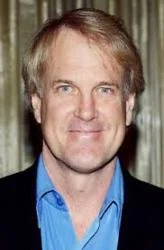
Yosko Yosifov — born Yosif Aleksandrov Yosifov — was a Bulgarian composer and conductor who helped build the country’s modern opera and orchestral life. His work moved between the stage, symphony, radio, and community music, and his leadership helped establish the state opera institutions in Stara Zagora and Varna. Rooted in Bulgarian folk rhythm but shaped by European classical training, his music ranged from operas and symphonies to chamber, choral, and vocal works.
A musical childhood in Kazanlak
Yosifov was born on February 8, 1911, in Kazanlak, into a family deeply involved in local cultural life. His father, Aleksandar, helped found the town’s Iskra community center and organized an amateur opera troupe in which the family performed. Yosko began playing piano at seven and later took up the flute. As a schoolboy, he formed an orchestra and choir, conducted his own early pieces, and wrote a children’s operetta, “Snow White and the Seven Dwarfs,” which was staged in Kazanlak and nearby towns.
In 1931, he entered the State Academy of Music in Sofia. He studied with leading figures of Bulgarian music, including Pancho Vladigerov and Dobri Hristov, and graduated with distinction in 1934. Even as a student, he was already composing ambitious works, including the operas “Bilyana” and “Tsar Samuil.” His early experiences performing for local audiences helped shape a belief that ambitious music could still speak directly to ordinary listeners.
Building opera in Stara Zagora and Varna
Yosifov began his professional career as a composer, teacher, radio editor, and conductor. In 1939 he moved to Stara Zagora, where he led and edited programs for the local radio station while working with amateur opera groups, the city symphony orchestra, and a male choir. His opera “Bilyana” was staged there in 1943 under his direction. After the Stara Zagora Opera became a state institution, he served as its chief conductor from 1946 to 1948.
The next chapter unfolded in Varna. Yosifov became conductor of the State Symphony Orchestra in 1948 and went on to lead the Varna National Opera, serving as its chief conductor and director in the 1950s. Under his baton, the company presented more than a thousand performances, and he helped raise the city’s profile as an opera and symphonic center. He also conducted abroad in countries including Poland, Romania, Czechoslovakia, and Yugoslavia.
His work as an organizer mattered as much as his podium performances. In both Stara Zagora and Varna, he helped establish institutions that could train performers, develop audiences, and sustain an ongoing repertoire. He also supported amateur ensembles and music education, giving professional music a wider community around it.
A composer shaped by folk tradition
Yosifov composed throughout his life, even while holding demanding conducting posts. His output included nine symphonies, operas, symphonic poems, concertos, chamber and instrumental pieces, choral works, and songs. Among his best-known works are the symphonic poems “Sadness” and “September People,” along with his cello concerto and the opera “Tsar Samuil.” He also reorchestrated and recorded Georgi Atanasov’s opera “Gergana.”
Bulgarian folk music was a lasting foundation for his style. He drew on its melodies, asymmetric meters, and rhythmic vitality, combining them with the scale and structure of European classical music. His compositions could be dramatic and expressive, yet often carried a lyrical sensibility. That blend made him part of a generation tasked with shaping a distinct Bulgarian musical voice for the concert hall and opera stage.
Yosifov’s influence extended to performers as well. Singers including Nikola Nikolov, Alexandrina Milcheva, and his brother, the celebrated tenor Iliya Yosifov, developed important roles under his direction. His son, Alexander Yosifov, also became a composer, extending the family’s musical legacy into another generation.
Later years and legacy
In 1971, Yosifov settled in the village of Tuzha, near his hometown, where he continued composing during his later years. He received Bulgaria’s title of Honored Artist in 1979 and the Order of the People’s Republic of Bulgaria, first degree, in 1986. He died on May 2, 2001.
Yosko Yosifov’s career joined the work of an artist and institution-builder. He wrote ambitious works in many genres, conducted orchestras and opera companies, introduced new programming through radio, and helped establish enduring stages for Bulgarian music. His legacy lives in both his compositions and the musical institutions he helped bring into being.