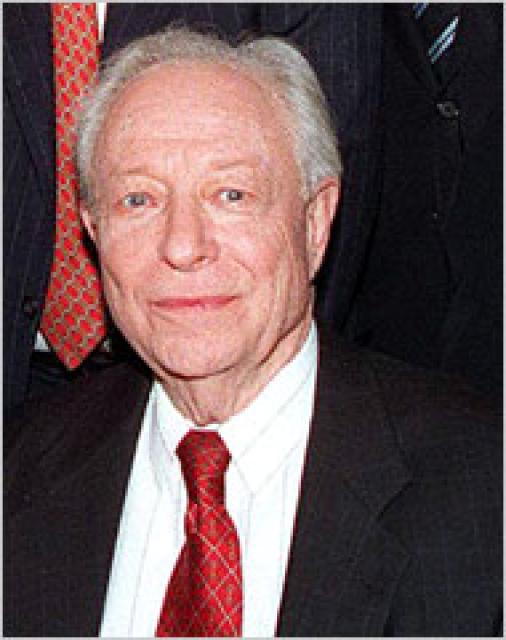
Irving Kristol
 USA
USA- Irving Kristol: Founder of Neoconservatism
- Journalistic and Intellectual Career
- Neoconservatism
- Neoconservatism vs. Liberalism and Conservatism
- "Confessions of a True Neoconservative"
- Two Cheers for Capitalism
- Later Years and Legacy
Irving Kristol: Founder of Neoconservatism
Early Life and EducationIrving Kristol was born in Brooklyn, New York, in 1920 to Orthodox Jewish parents from Eastern Europe. He studied history at the City College of New York, where he joined a Trotskyist student group that would later become the influential "New York intellectuals."
Journalistic and Intellectual Career
Kristol was a prolific writer and editor, founding, sponsoring, and editing numerous magazines. In the 1970s, he played a pivotal role in the development of the intellectual and political culture of the time. He helped establish the influential journal The Public Interest, which became a platform for the ideas of neoconservatism.
Neoconservatism
In 1973, the term "neoconservatism" was coined by Michael Harrington to describe liberal intellectuals and political philosophers who were disenchanted with the dominant liberalism within the Democratic Party. Kristol embraced the term, using it to describe the new form of conservatism espoused by The Public Interest.
Neoconservatism vs. Liberalism and Conservatism
Neoconservatives rejected the idea of extensive social programs, but they differed from traditional conservatives in their limited support for Roosevelt's welfare state. They believed that the pursuit of wealth and a free market was essential for individual and societal well-being.
"Confessions of a True Neoconservative"
In an essay titled "Confessions of a True, Self-Confessed—Perhaps the Only—'Neoconservative'," Kristol argued that neoconservatism was not an ideology but rather a way of thinking about politics that prioritized realism and pragmatism over abstract principles.
Two Cheers for Capitalism
In his book "Two Cheers for Capitalism," Kristol argued that capitalism deserves two cheers for its ability to generate wealth and its close association with personal freedom. However, he also recognized the social and spiritual problems that capitalism could create and called for a balancing of economic philosophy with political, moral, and religious values.
Later Years and Legacy
Kristol continued to write and lecture until his death in 2009. He remained a prominent figure in the intellectual and political spheres, known for his incisive analysis and influence on neoconservative thought.