Isaac
In the Book of Genesis, Isaac stands at the center of a family story that shapes the biblical account of Israel’s origins. The son of Abraham and Sarah, he inherits a covenant, survives a defining test on Mount Moriah, and becomes the father of twins whose rivalry will shape the next generation. Judaism and Christianity remember him as one of the patriarchs; Islam also honors him as a prophet.
A promised child
Genesis tells that Isaac was born when Abraham and Sarah were very old, fulfilling a promise that had once seemed impossible. His name is associated in the biblical narrative with laughter: both parents had laughed at the prospect of having a child in old age, and Sarah later described the news as a source of joy. Isaac’s birth marked the continuation of the covenant God had made with Abraham.
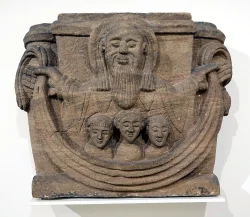
The account of Isaac’s near-sacrifice, known in Jewish tradition as the Akedah, is one of the most powerful episodes in Genesis. God tests Abraham by asking him to offer his son. At the last moment, an angel stops Abraham, and a ram is offered in Isaac’s place. The story has inspired centuries of Jewish, Christian, and Muslim interpretation, with each tradition developing its own ways of understanding the test and its meaning.
Rebekah, Esau, and Jacob
Isaac’s marriage connects his story to another generation. Abraham’s servant travels to find a wife for him, and Rebekah agrees to leave her family and marry Isaac. Genesis portrays their relationship with tenderness: after Sarah’s death, Isaac finds comfort with Rebekah.
The couple struggles for years to have children. Rebekah eventually gives birth to twins, Esau and Jacob. Their household becomes divided by preference and rivalry: Isaac favors Esau, a hunter, while Rebekah favors Jacob. When Isaac grows old and nearly blind, Jacob follows Rebekah’s plan to receive the blessing intended for Esau. The deception drives the brothers apart and sets the stage for Jacob’s long journey away from home.
Isaac also appears as a landholder and herdsman in the region of Gerar. In a time of famine, he settles there, reopens wells dug in Abraham’s day, and negotiates with local rulers over water and territory. These episodes present him not only as a figure in a dramatic family narrative but as a patriarch concerned with survival, inheritance, and peace with neighboring communities.
A patriarch across traditions
Genesis describes Isaac as living to an old age. After Abraham’s death, Isaac and his half-brother Ishmael bury their father in the family tomb at Machpelah. Isaac is later buried there by his sons, Jacob and Esau.
His narrative is shorter and quieter than those of Abraham or Jacob, but his role is essential: he carries the family covenant across generations. In Jewish and Christian tradition, Abraham, Isaac, and Jacob form a foundational line of patriarchs. The Qur’an also names Isaac among the prophets and honors him as a righteous son of Abraham. The stories surrounding him continue to invite reflection on faith, family, inheritance, and the promises passed from one generation to the next.