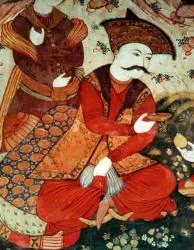
David
 United Kingdom of Israel
David is one of the Bible’s most memorable kings: a shepherd who rises to power, a warrior celebrated in song, and a ruler whose victories are shadowed by personal failure. The Hebrew Bible presents him as the founder of a royal dynasty centered on Jerusalem. He is also a major figure in Judaism, Christianity, and Islam, where he is remembered as King David and as the prophet Dāwūd.
From shepherd to king
According to the Books of Samuel, David was the youngest son of Jesse, from Bethlehem. The prophet Samuel anointed him while he was still a shepherd. The biblical narrative then brings him to the court of King Saul, where David becomes known for his courage and musical skill. His victory over the Philistine champion Goliath is the best-known episode from this early part of his story, though its details belong to the biblical account rather than to independently confirmed history.
David’s success made him popular and deepened Saul’s suspicion of him. He spent years moving between the court and the wilderness as a fugitive, gathering supporters while avoiding the king’s attempts to kill him. After Saul’s death, David became king of Judah at Hebron. The biblical account says that he later united the Israelite tribes under his rule and captured Jerusalem, making it his political center. He brought the Ark of the Covenant to the city and established a royal court there.
Power, promise, and failure
The Bible remembers David as both a shrewd military leader and a deeply flawed human being. He extended his kingdom through alliances and warfare, but his story also confronts the damage done by royal power. In the account of Bathsheba, David takes another man’s wife and arranges the death of her husband, Uriah. The prophet Nathan challenges him, and the narrative makes the episode a turning point: the king’s household is marked by conflict, rebellion, and loss.
David’s relationship with God is central to the biblical portrait. In 2 Samuel, God promises that David’s dynasty will endure, a covenant that later generations interpreted as a source of hope. David is traditionally associated with many of the Psalms, though the collection was written and gathered over time and cannot all be assigned to him historically. The image of David as musician, poet, and worshipper became as powerful as the image of the warrior king.
Evidence and enduring influence
The biblical books provide the fullest account of David’s life, but they were written and edited as religious histories, not modern biographies. Archaeology cannot confirm most episodes or the full scale of the kingdom described in Samuel and Kings. A ninth-century BCE inscription found at Tel Dan is widely read as referring to the “House of David,” suggesting that a dynasty by that name was known to neighboring kingdoms. It does not verify the stories about David’s individual campaigns or court.
David’s legacy continued to grow long after the monarchy ended. In Jewish tradition, the expectation of a future anointed ruler became associated with David’s line. Christian texts present Jesus as descended from David and describe him through messianic language. The Qur’an honors Dāwūd as a prophet and king who received the Zabūr, often identified with the Psalms, and was granted wisdom and just rule.
Across these traditions, David remains compelling because he is remembered as both exalted and vulnerable. His story moves from the pasture to the throne and from victory to remorse, leaving later readers with a portrait of leadership tested by ambition, accountability, and faith.